




Palladian architecture through an accessible and contemporary enhancement project.
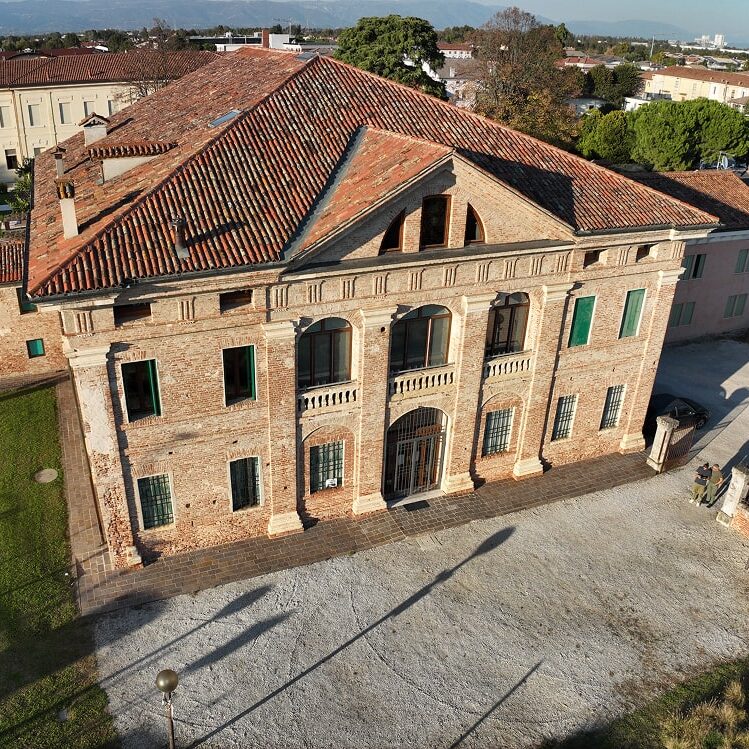
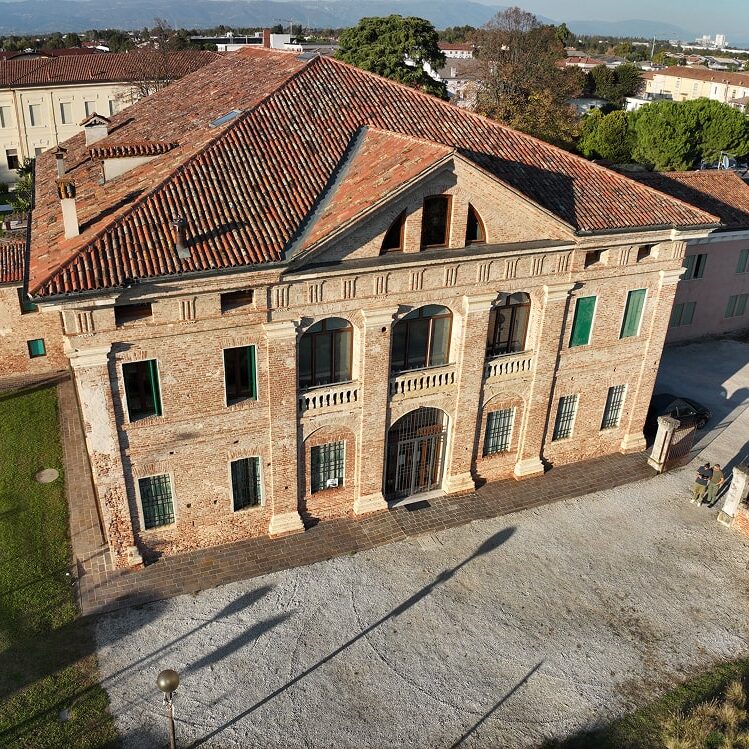

The history of Villa Thiene is deeply connected to the fortunes of the Thiene family, one of the most influential noble houses in the Vicenza area. As early as the fourteenth century, the Thiene family played a leading political and administrative role in the region, gradually consolidating property, titles, and social prestige. Following Vicenza’s incorporation into the Republic of Venice in 1404, the family maintained and strengthened its position through public offices, alliances, and land investments.
In Quinto Vicentino, the Thiene family gradually established the center of their rural interests, acquiring tithes, land, and rights. During the fifteenth and sixteenth centuries, the estate developed into a place of representation and agricultural management, eventually becoming an ambitious architectural project. Construction of the villa, begun around the middle of the sixteenth century, was closely intertwined with family events: journeys to Rome, relations with European courts, strategic marriages, and inheritance changes all influenced the pace and evolution of the project.
The deaths of key figures and changing political and economic circumstances led to a slowdown in construction, which was never completed according to the original design. Over the following centuries, the villa underwent restorations, changes of ownership, and functional transformations, until it was acquired by the Municipality in the nineteenth century. Today, the building still preserves the traces of this long family history, marked by ambition, prestige, and adaptation over time.
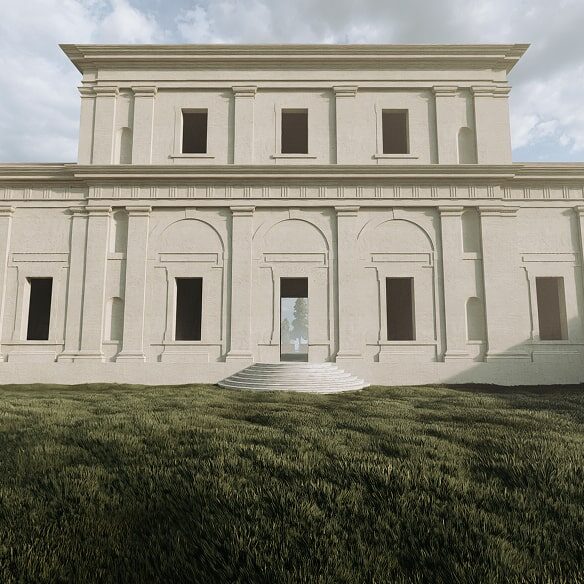
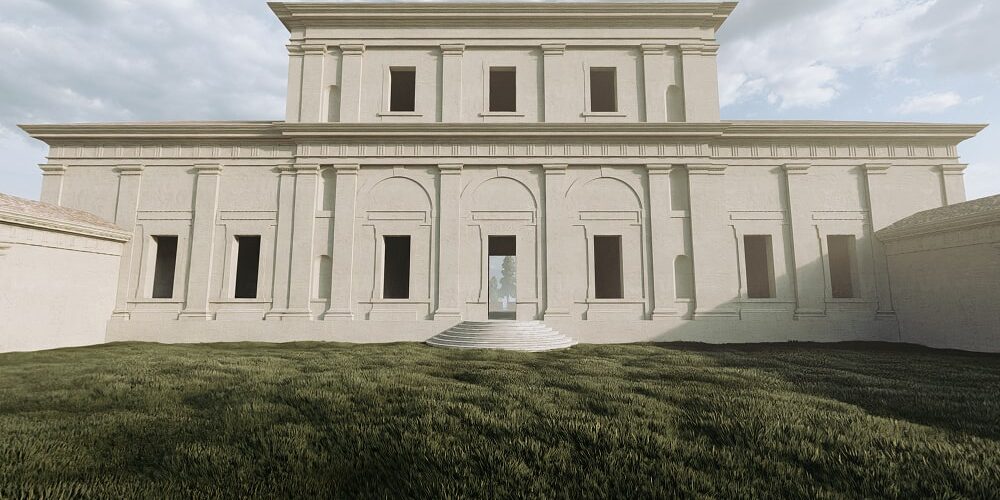
Villa Thiene, designed by Andrea Palladio, combines Renaissance harmony and agricultural functionality in a monumental complex that remained unfinished but retains great historical significance.
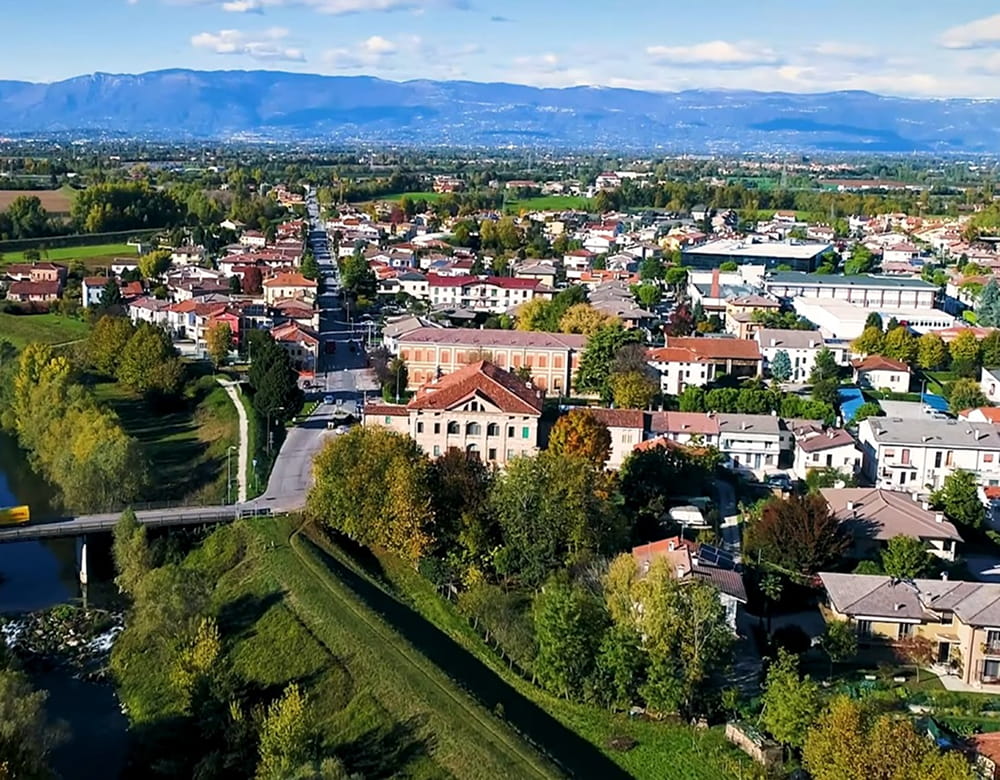
Villa Thiene was born from the meeting of the patrons’ ambitions and the genius of Andrea Palladio, who was commissioned to conceive a complex that would surpass the traditional idea of a country villa. The project envisioned a monumental structure organized around courtyards, loggias, and hierarchically ordered spaces, capable of combining representation and agricultural functions within a single integrated system.
The architecture was based on principles of symmetry and proportion inspired by classical antiquity but reinterpreted in a modern way. The villa was conceived as a journey: from the public road to the portico, from the courtyard to the residential quarters, and finally to the productive areas. Nothing was left to chance; every element found its meaning in relation to the whole.
The project, however, remained unfinished. Only a portion of the planned structure was completed, yet this very condition makes the villa particularly significant. The building we see today is both a completed work and a fragment of a much larger design. It still conveys the original vision of grandeur and order, while also reflecting the tension between architectural ambition and historical reality that halted its development without diminishing its value.
Villa Thiene, designed by Andrea Palladio, represents a balance between Renaissance harmony, agricultural functionality, and monumental ambition. Although unfinished, it still retains remarkable historical and architectural significance.
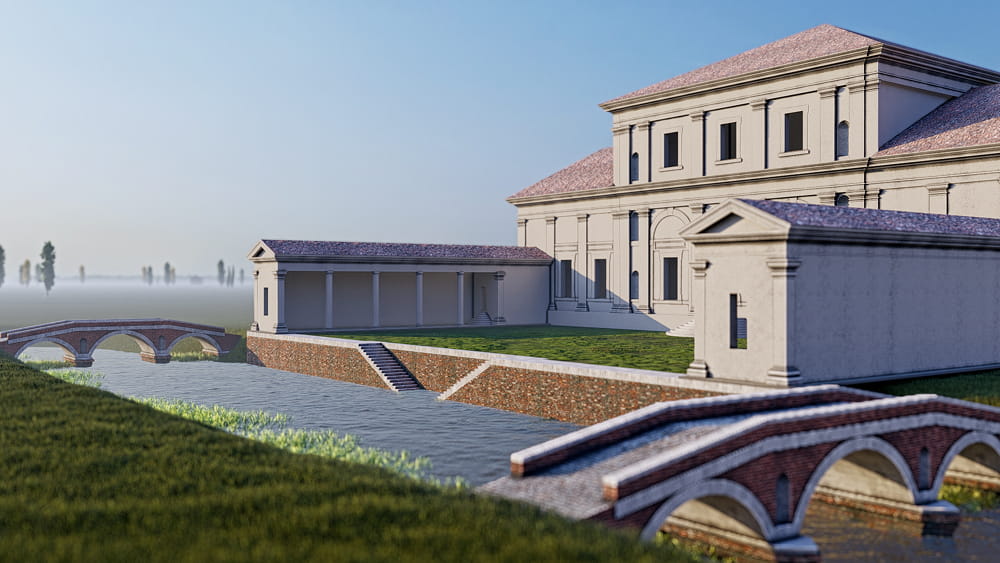
The park of Villa Thiene is a place where landscape, history, and contemporary design come together. It is not simply a green area surrounding the villa, but a space that preserves traces, balances, and potential linked to its Renaissance origins and its evolution over time.
The project stems from the desire to interpret and understand this space with care and sensitivity, transforming the landscape into a tool capable of narrating the architecture and restoring visitors’ perception of the original geometries. The following pages illustrate the initial concept, the decisions that shaped the completed intervention, and the educational path that made its realization possible.
The new park of Villa Thiene reinterprets Palladio’s design through light and reversible landscape interventions that enhance the historic site while respecting both the landscape and archaeological constraints. Green spaces thus become instruments of memory, sustainability, and contemporary enjoyment.
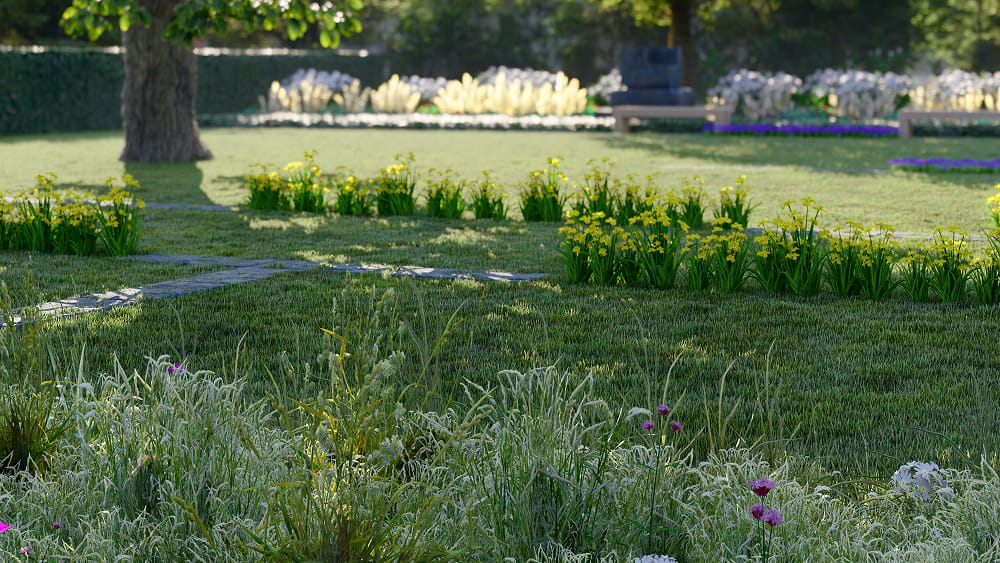
Villa Thiene in Quinto Vicentino can be visited by reservation and was recently renovated with the addition of accessible pathways.
Cookie policy
Su questo sito utilizziamo strumenti propri o di terze parti che memorizzano piccoli file (cookie) sul tuo dispositivo. I cookie sono normalmente utilizzati per consentire il corretto funzionamento del sito (cookie tecnici), per generare rapporti sull’uso della navigazione (cookie statistici) e per pubblicizzare in modo adeguato i nostri servizi/prodotti (cookie di profilazione). Possiamo utilizzare direttamente i cookie tecnici, ma hai il diritto di scegliere se abilitare o meno i cookie statistici e di profilazione. Abilitando questi cookie, ci aiuti a offrirti un’esperienza migliore.