




One of the most original expressions of Mannerism.

Listen to the audio
Giovanni Demio, born in Schio, in the province of Vicenza, around 1510–1515, is the author of the frescoes on the vault of the square hall of the sixteenth-century building of Villa Thiene in Quinto Vicentino, a project on which the artist worked in the years 1552–1553.
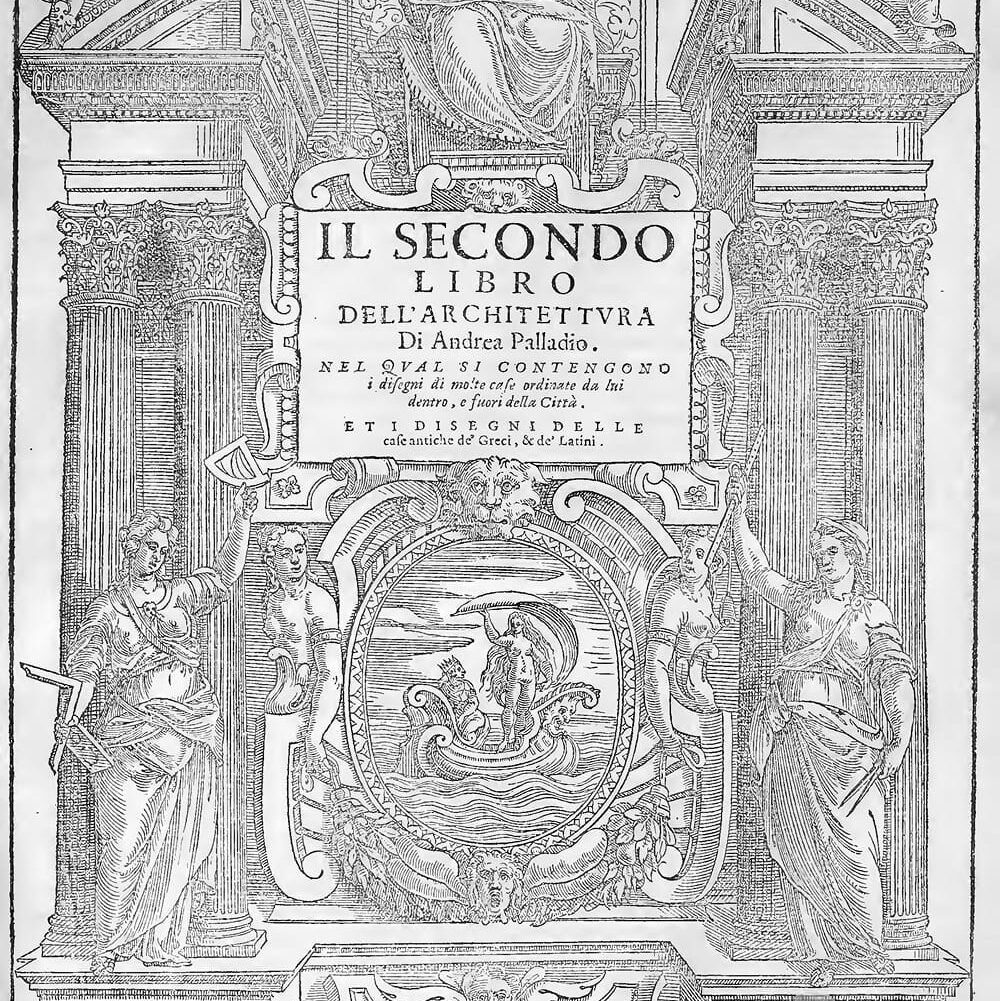
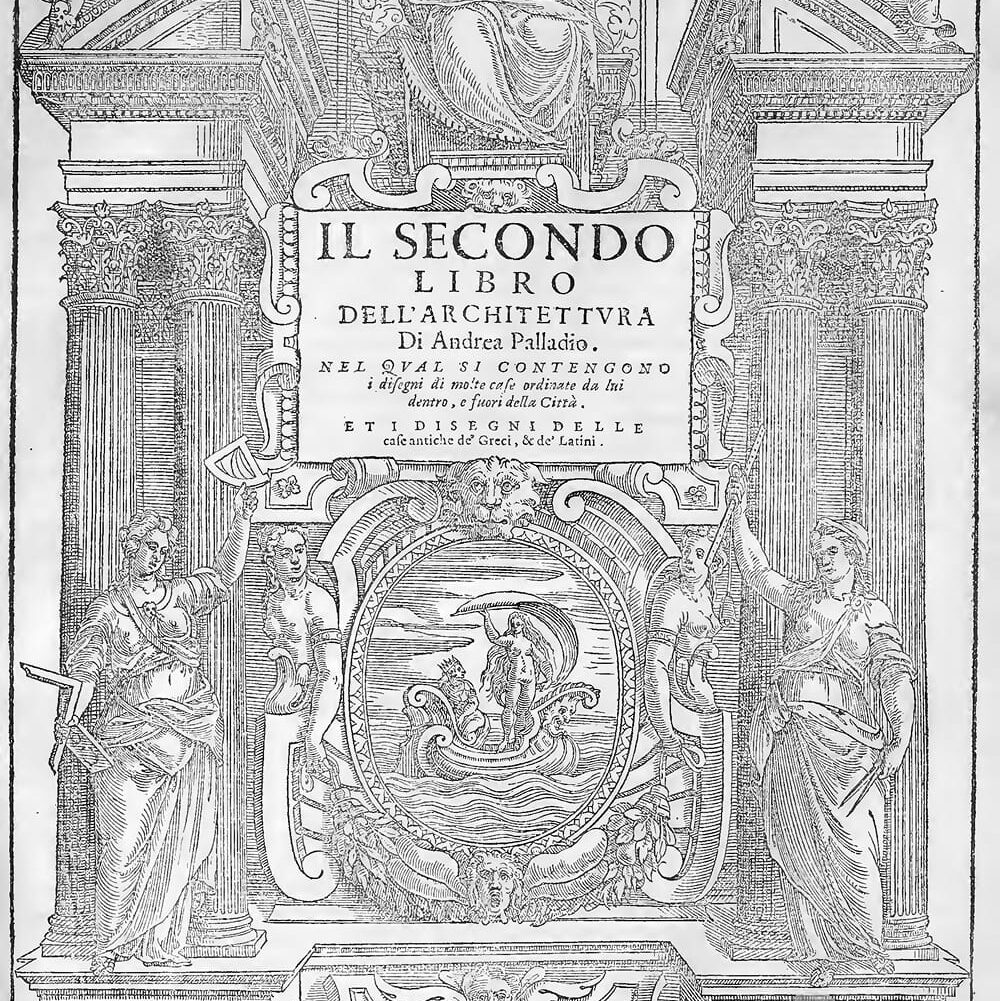
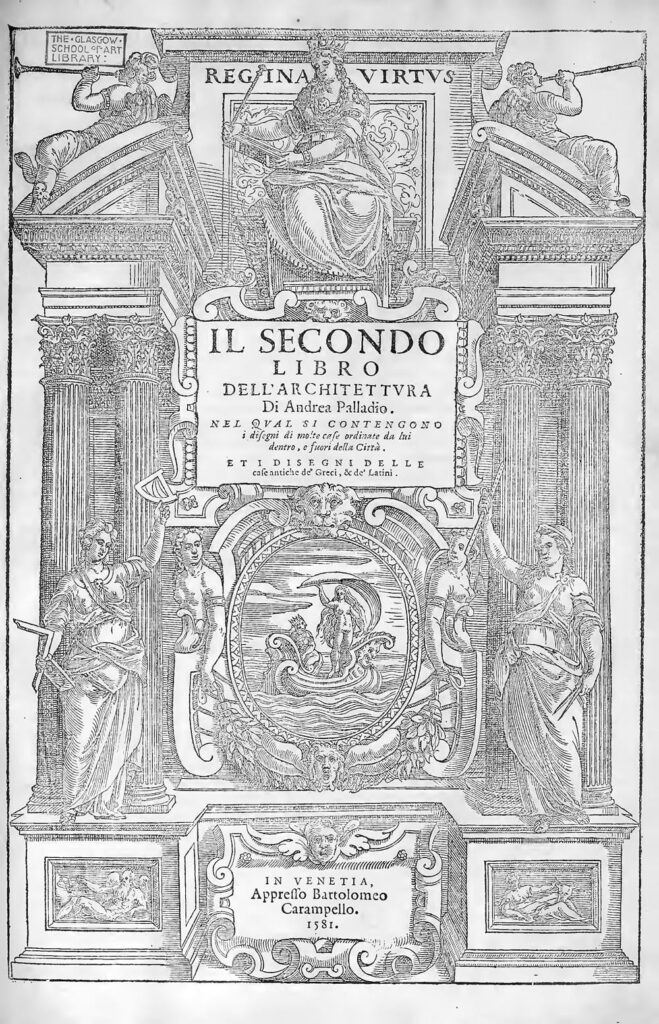
The Demio we encounter at Villa Thiene is an artist already fully formed and highly experienced, an original Mannerist distinguished by his wit, creativity, and boldness. His adherence to Mannerism was singular: Demio cannot, in fact, be described as a Venetian Mannerist. On the contrary, it is difficult to define him in narrowly circumscribed terms. He absorbed elements from disparate sources, learning from and drawing inspiration from models of various kinds, which he reinterpreted and reworked freely, creating a form of painting so ingenious and acute as to reveal him as a highly capable and intelligent artist. Andrea Palladio himself, in I Quattro Libri dell’Architettura, defined him as an “huomo di bellissimo ingegno”.
In the 1530s Demio came into contact with Brescian painting—Savoldo, Romanino, and Moretto—which would shape his early activity, including the Deposition of Lavenone and the organ shutters of Schio.
His stay in Pisa in 1538, a journey that likely took him as far as Rome, provided new stimuli.
In Milan, at Santa Maria delle Grazie in the early 1540s, Demio was already seeking new solutions by adopting references to Michelangelo of the Sistine Chapel and to the culture of the Oratory of San Giovanni Decollato, and he demonstrated his awareness of the culture of the “Northern Romanists”, who had also worked at the Villa Imperiale in Pesaro.
Still in the first half of the 1540s, Demio took part in Venice in the execution of the cartoon for the Tree of Jesse. This occasion marked an encounter and confrontation with the new artistic language of the “second generation”, formed through the fusion of Tuscan and Roman elements. From artists such as Cecchino Salviati, Demio thus assimilated a taste for elegance and refinement—qualities he was able to develop during the same years in the canvas of the Sacra Conversazione of Calino.
The artist would have the opportunity to deepen his knowledge of the artistic language of central and southern Italy during his new and fundamental stay in Naples between 1547 and 1550, where he executed decorations in the royal palace of Castel Nuovo and in several apartments of the viceregal palace, as well as the Presentation at the Temple in the church of San Francesco d’Assisi in Maiori.
The frescoes of Villa Thiene comprehensively summarize that vast cultural background which Demio, precisely in Quinto Vicentino, came to reinvent.
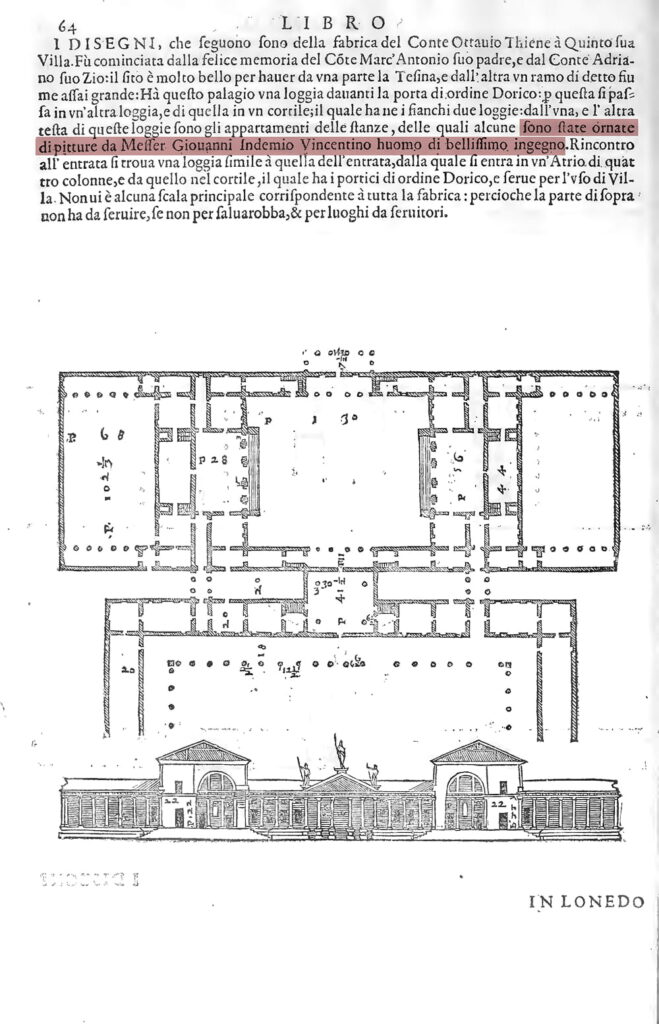
It is Andrea Palladio himself who, still in his treatise of 1570, records the presence at Villa Thiene of “Messer Giovanni Indemio Vicentino”, the author of the decorations of “some rooms” of the villa.
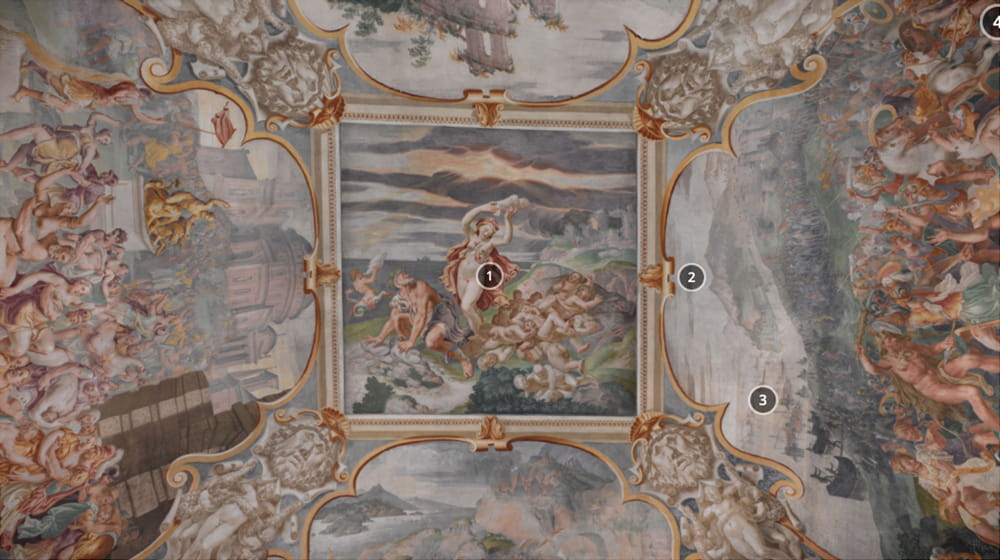
The ceiling of the hall is divided into a central scene depicting the myth of Deucalion and Pyrrha, enclosed within a painted square frame, and four lateral medallions separated by a monochrome decoration of caryatids, putti, and festoons, repeated identically four times. The lateral medallions depict four further scenes: Hercules Conquering the Girdle of Hippolyta; The Rape of the Sabine Women; The Battle between the Lapiths and the Centaurs; The Amazons Coming to the Aid of Troy.
In the decoration one perceives those points of reference fundamental to Demio at that moment above all: the lesson of Giulio Romano and the culture of central and southern Italy. The influence of Giulio Romano’s painting in the frescoes of Quinto is evident in the distinctly Mannerist style, composed of muscular figures drawn in disjointed, indeed exaggeratedly contorted poses. It is a disorderly and forceful accumulation, yet executed with extraordinary minuteness, of figures that fill the scene and even press against its limits.
The lesson of the Roman master returns once again in the battle scenes which, so rich and crowded, achieve results of singular inventiveness and beauty. Even the manner of rendering drapery seems to derive from certain examples by Giulio Romano: drapery comes to assume an increasingly significant role, acquiring an importance of its own. The folds of the garments are drawn with exaggerated emphasis, with a metallic rendering of the material, achieved through the use of vivid colors and strong chiaroscuro effects.
The aforementioned influence of the cosmopolitan culture of central and southern Italy can here at Villa Thiene be inferred, for example, from the similarity between certain figures by Demio and some types of female figures by Vasari.
The Roman influence of the master Perin del Vaga appears instead in the armor engraved with the faces of ferocious animals and in the monochrome motif of the caryatids. A close connection of elements with works by the Spaniard Pedro de Rubiales also emerges; Rubiales was in Rome from 1543 and later, in 1547, in Naples. Certain soldier figures approach the characters populating Rubiales’s paintings in the Throne Room of the Palazzo dei Conservatori on the Capitoline Hill, or in the paintings in Santo Spirito in Sassia. Rubiales’s style, also based on Vasarian principles, contains an impetus, strength, and vigor that are likewise found in the decoration of Quinto Vicentino.
At Villa Thiene, as in Milan, landscapes populated by Roman ruins and cities with tall, pyramidal constructions demonstrate how the lesson of the northern world remained a living theme for Demio. The presence of monumental buildings seems to take on an even more fundamental role, especially in the scene of the Rape of the Sabine Women. Here a circular-plan structure appears, one that Demio had already represented on other occasions (in the altarpiece of Lavenone and in the organ shutters of Schio), but which in the frescoes of Villa Thiene is described with particular minuteness. It is interesting to note how the artist from Schio, despite working in close contact with Palladio, does not reproduce the architectural motifs typical of Palladio’s villas; instead, there is once again a clear return to the lesson of Giulio Romano, to those modules and rusticated forms that the Roman master employed in Mantua at Palazzo Te.
The decoration of the hall of Villa Thiene in Quinto Vicentino stands as one of the finest testimonies to Giovanni Demio’s complete adherence to Mannerism—a Mannerism deeply indebted to the painting of Giulio Romano, yet reinvented by the artist from Schio through the contribution of the diverse cultures he had the opportunity to encounter and through his own ingenuity, allowing it to evolve.
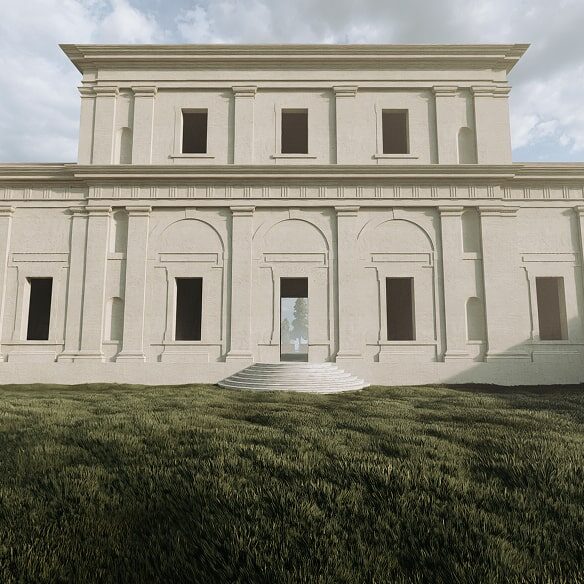
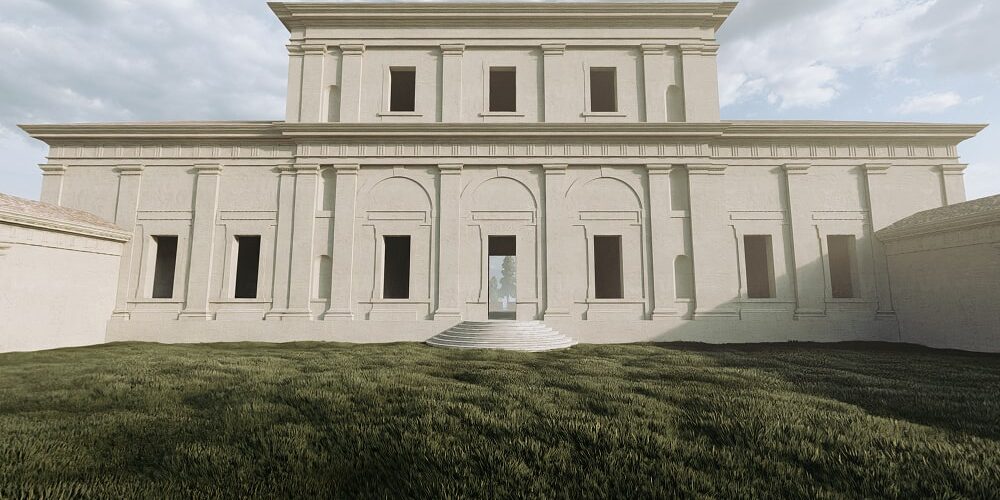
Villa Thiene in Quinto Vicentino can be visited by reservation and was recently renovated with the addition of accessible pathways.
Cookie policy
Su questo sito utilizziamo strumenti propri o di terze parti che memorizzano piccoli file (cookie) sul tuo dispositivo. I cookie sono normalmente utilizzati per consentire il corretto funzionamento del sito (cookie tecnici), per generare rapporti sull’uso della navigazione (cookie statistici) e per pubblicizzare in modo adeguato i nostri servizi/prodotti (cookie di profilazione). Possiamo utilizzare direttamente i cookie tecnici, ma hai il diritto di scegliere se abilitare o meno i cookie statistici e di profilazione. Abilitando questi cookie, ci aiuti a offrirti un’esperienza migliore.