




A brilliant and unconventional protagonist of Mannerism.

Listen to the audio
Giovanni Demio was a painter active in the sixteenth century who emerged on the artistic scene of his time as a disruptive figure, a “genius of the first rank” who for centuries fell victim to a kind of historiographical oblivion. Despite his artistic stature, Demio was long regarded as a “perfect unknown,” a contradiction that Vittorio Sgarbi attributes to several contributing factors, not least the stubborn omission of his name by Giorgio Vasari in the celebrated Lives. This critical silence appears paradoxical today, especially when one considers that in 1556 Demio was paid for the prestigious roundels of the Biblioteca Marciana in Venice sums identical to those earned by giants such as Paolo Veronese. His image is that of an artist who “traveled slowly, in third class,” far from the major circuits of academic celebration, yet capable of an expressive power that places him at the forefront of Mannerist experimentation.
Originally from Schio, in the Vicenza area, Demio embodies the archetype of the restless and “disobedient” artist. His career does not follow a linear path but unfolds as an itinerary marked by an “almost Pasolinian restlessness,” to use Sgarbi’s words, leading him to move continuously between Veneto, Lombardy, and southern Italy. This geographical and stylistic nomadism reflects a temperament constitutionally intolerant of any pre-established order, making him a “rebellious, off-scale, uncontrollable, and unpredictable” artist. Demio never fully submits either to the canons of orderly classicism or to the harmonious grace of Po Valley naturalism; rather, he is a pure formalist who pushes figurative research toward a true “visionary delirium” that in some respects seems to anticipate by decades the tormented sensibility of El Greco.
Demio’s style is distinguished by an almost tactile physicality, which Sgarbi describes through the concept of “fat matter.” His brush does not seek academic smoothness but animates figures from within, with a stroke that oscillates between the “curiously infantile” and the grotesque, endowing physiognomies with a pathetic and resentful character. It is a painting of “body and blood,” in which light does not gently caress surfaces but vibrates forcefully across powerful anatomies and shimmering fabrics, generating contrasts of an abstract, nervous vitality. This ability to make “strong light vibrate on fleshy skin” renders his works immediately recognizable, marking a clear distance from the “Raphaelesque vulgate” and from the composure of Tuscan-Roman currents.
In this context, Demio’s figure asserts itself as both dissonant and magnetic. He is an indomitable experimenter who challenges tradition, capable of absorbing Michelangelo’s legacy and translating it into a harsh and profoundly modern language. His critical rediscovery—initiated in the twentieth century by scholars such as Giuseppe Fiocco and Giovanni Previtali and vigorously pursued by Vittorio Sgarbi—now restores the image of a master of “exceptionally high formal temperature,” an homo di bellissimo ingegno, as Andrea Palladio defined him, whose work represents one of the most radical and stimulating peaks of international Mannerism.
Listen to the audio
The relationship between Giovanni Demio and Giorgio Vasari represents one of the most complex and revealing critical issues in the history of sixteenth-century art. Although Vasari, in the Vita, celebrates numerous Venetian and Lombard artists, he stubbornly remains silent about Demio—a silence that Vittorio Sgarbi interprets as a “deliberate lapse” or an outright damnatio memoriae. This refusal did not stem from a lack of merit, but rather from a stylistic and personal incompatibility: Demio was an artist “constitutionally intolerant” of the order and academic discipline that Vasari sought to impose.
The confrontation between the two becomes explicit and almost provocative during Demio’s experience in southern Italy. An emblematic episode is the Presentation of Jesus in the Temple in the church of San Francesco in Maiori, executed after 1545. In this work, Demio reworks a direct model by Vasari—the painting created for Sant’Anna dei Lombardi in Naples—but completely transfigures it. According to Sgarbi’s analysis, Demio’s version is paradoxically more “alive, engaging, and animated” than Vasari’s original. Demio does not merely copy; he asserts an inventive autonomy that transforms the lofty and rigid Tuscan lesson into an immediate and vibrant narrative, where light plays freely across “flourishing anatomies” and shimmering fabrics.
Demio’s Neapolitan sojourn was not a mere professional interlude, but a profound immersion in a reality that suited his restless nature. Sgarbi describes an artist who seems to have lost his soul among the alleys of Naples, working in churches “damp with sweat, greasy and sublime,” such as San Giacomo degli Spagnoli and Santa Maria di Montecalvario.
It is precisely at Montecalvario that Demio leaves behind a work that defies any attempt at unified classification: the complex triptych of the Madonna of the Rosary. Here one senses an almost disconcerting stylistic gap between the various sections: the central panel appears more minute and only modestly inventive, while the surrounding elements and the large lunette with the Last Judgment erupt into a dense, corporeal, and vibrant painterly language.
In this context, Demio demonstrates that he has metabolized Michelangelo’s lesson through a deforming and visionary lens. His ability to bring together themes from different traditions in an “utterly original synthesis” reveals an artist who accepts no compromise, capable of moving from the delicacy of a face to the plastic violence of a grotesque body. Naples becomes the stage for a “pathetic-grotesque” maturity, where his style grows ever more personal, distinguished by those tormented physiognomies that make him unique within the artistic landscape of his time.
Listen to the audio
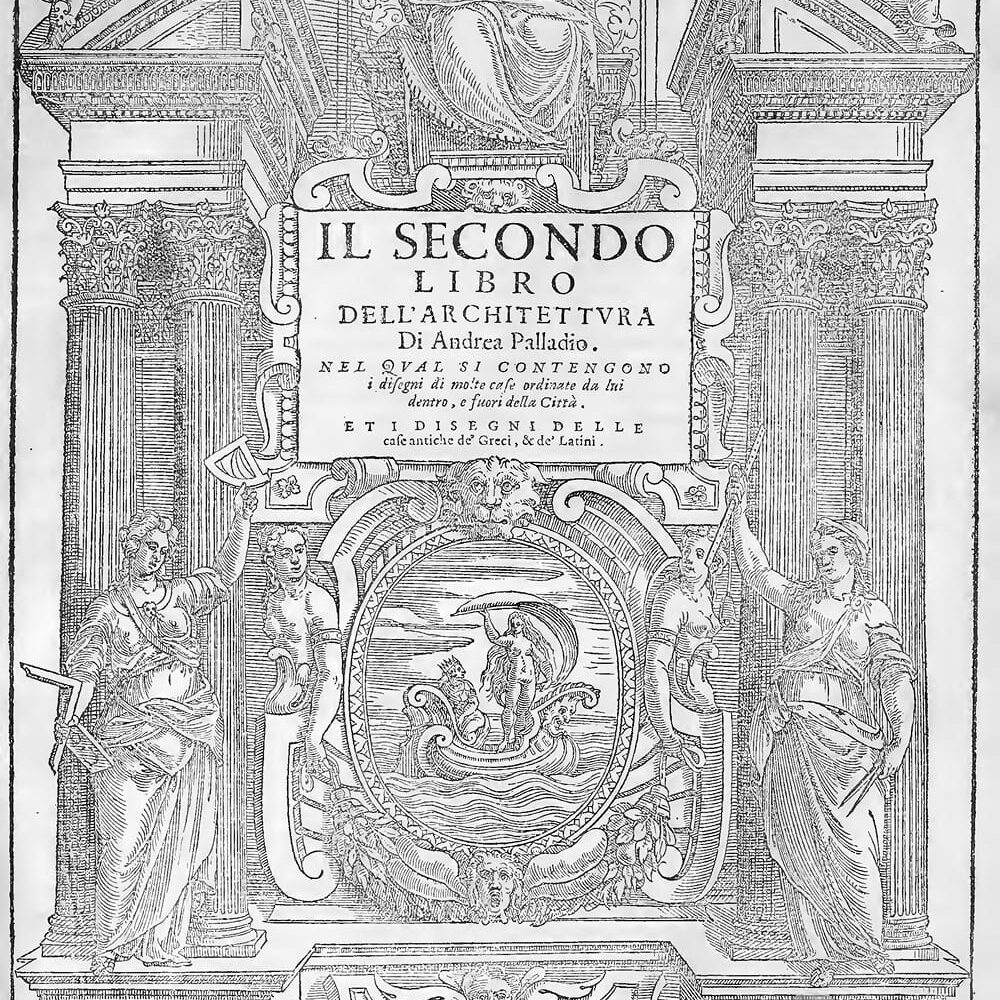
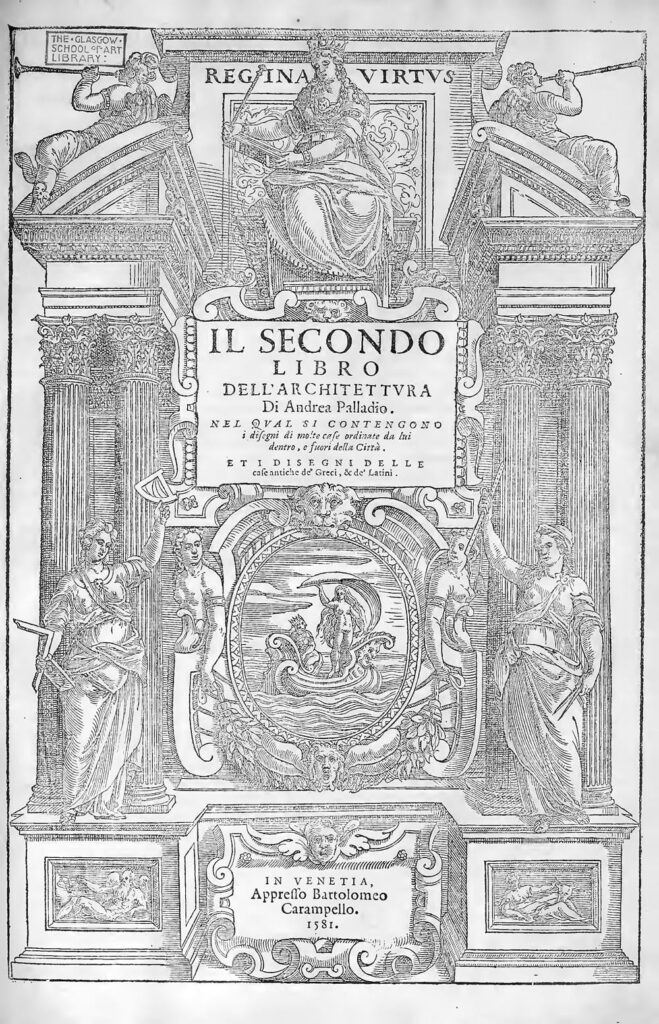
The relationship between Giovanni Demio and Andrea Palladio represents one of the most fascinating and antithetical encounters of the Vicentine Renaissance. Although their aesthetic visions appeared distant, Palladio showed profound esteem for the painter from Schio, going so far as to describe him in his writings as an “huomo di bellissimo ingegno.” This acknowledgment is particularly significant as it comes from an architect devoted to order and rule, who nevertheless chose Demio to decorate his “fabbrica” at Quinto Vicentino: Villa Thiene.
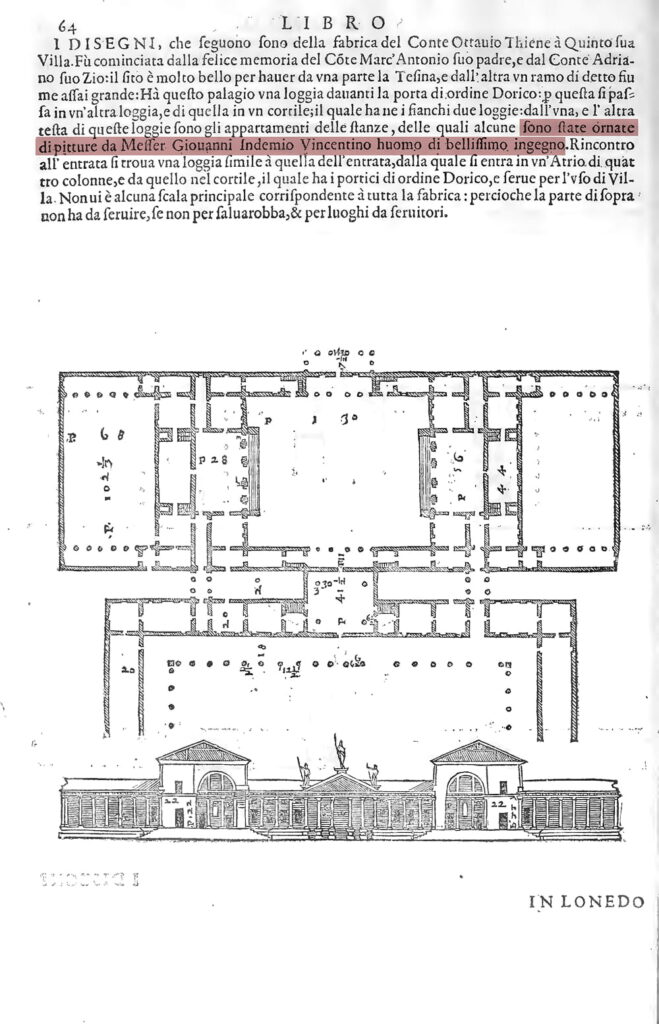
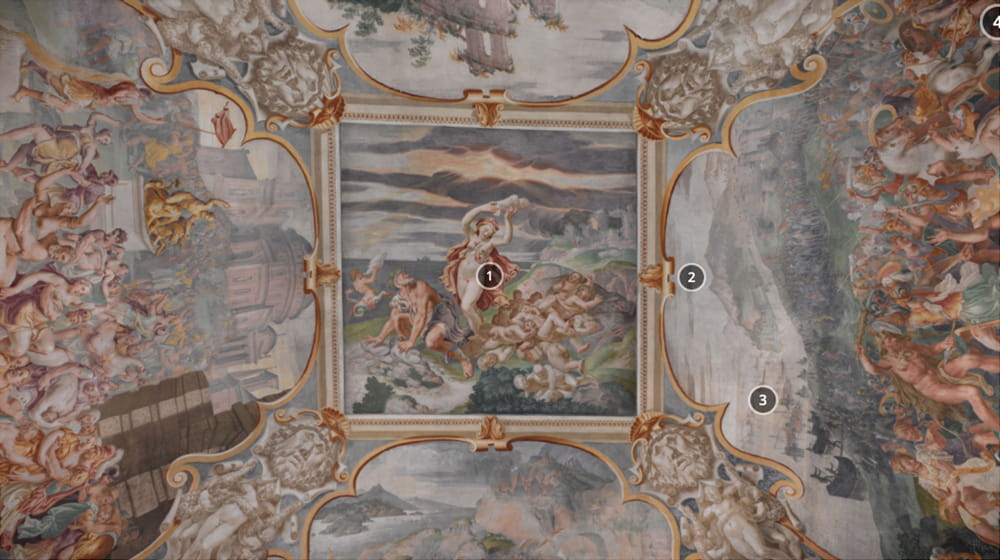
Demio’s intervention at Villa Thiene can be understood as a true challenge to the purity of Palladian classicism. While Palladio’s architecture pursued perfect harmony and zenithal symmetry, Demio introduced a form of painting that Vittorio Sgarbi has defined as “turbulent,” capable of unsettling those meticulously composed geometric spaces.
Demio positioned himself as an artist who was “disjointed, impertinent, and rebellious,” far removed from the radiant harmony of masters such as Paolo Veronese or from the ceremonial, courtly tone of Giovanni Battista Zelotti. His presence in Quinto Vicentino brought an energy that was “off-scale,” uncontrollable, and unpredictable, almost as if it sought to contaminate the building’s rationality with a restless and visionary vitality.
This spirit of stylistic “disobedience” is likely the reason why Demio’s figure was later overshadowed by more orthodox Palladian critics, who could not forgive him for having disturbed the geometric rigor of the villas with his harsh style.
A central element of the decorative program at Villa Thiene is the inclusion of archaeological motifs that Sgarbi identifies as the painter’s unmistakable signature. Demio introduces into the lower sections of the compositions the topos of the ruin, often characterized by a distinctive “vegetal plume” sprouting from the ancient stones. This motif is not a mere decorative whim, but reflects an “archaeological” sensibility that Demio shared with Jacopo Bassano, though articulated through a different formal tension. These ruins, visible in the backgrounds at Villa Thiene, establish a profound dialogue between the antiquity “reconstructed” by Palladio’s architecture and the antiquity “lived and fragmented” represented in Demio’s painting.
Ultimately, Demio’s work at Villa Thiene was not an escape from architecture, but a complex integration carried out “with body and blood.” He brought into the rooms of the villa the clean air of his Vicentine mountains, transforming the decoration into an itinerary of curiosity and restlessness. If Palladio embodied the universal language of architecture projected toward the future, Demio was the tormented and experimental soul who, while remaining faithful to his “fat matter” and grotesque physiognomies, knew how to honor the great architect’s invitation with an inventiveness that still appears modern and vibrant today.
Listen to the audio
The final phase of Giovanni Demio’s career marks the achievement of an exceptionally high formal intensity, in which the artist succeeds in asserting himself within the most prestigious centers of cultural power in northern Italy while preserving intact his nature as an indomitable experimenter. In Venice, between 1556 and 1557, Demio took part in one of the most significant decorative enterprises of the century: the ceiling of the Sansovinian Hall of the Biblioteca Marciana. Despite Vasari’s critical silence, documentary evidence shows that the artist was paid forty ducats for his roundels—the exact same sum received by Paolo Veronese—an unmistakable sign of professional affirmation and of an equality of status acknowledged by his contemporaries. In these Venetian works, such as the roundel devoted to Religion and the Gods, Demio displays a solid Michelangelesque framework filtered through a “Parmigianinesque” sensibility, which dissolves rigid Tuscan musculature into more fluid and iridescent lines.
Subsequently, Demio’s path shifted toward Milan, where his style underwent a further radical evolution in the cycle at Santa Maria delle Grazie. In this context, Vasari’s influence is definitively set aside to make room for new and decisive stimuli, including those of Bronzino and, above all, the experimentalism of Pellegrino Tibaldi. In the frescoes of the Sauli Chapel, Demio reaches peaks of intense expressionism, entering into direct competition with the most original painters of the time, such as Jacopo Bassano. As Vittorio Sgarbi emphasizes, in this Milanese phase Demio confirms himself as a pure formalist, capable of responding “in the name of Michelangelo” to the academic grace and to the “Raphaelesque vulgate” that dominated the period. His painting here becomes an act of stylistic resistance: a dense, “fat,” and visionary language that transforms pictorial matter into a vibrant emotional experience, bringing to a close the trajectory of an artist who never ceased to be a “rebellious outsider.”
In conclusion, the arc of Giovanni Demio’s career restores the image of an artist who traversed the Italian sixteenth century with an extraordinary degree of intellectual and stylistic autonomy. As Vittorio Sgarbi observes, Demio was not a mere supporting figure, but a “genius of the first rank,” capable of engaging on equal terms with the leading exponents of the Maniera, from Veronese to Tibaldi, while remaining an “eccentric” presence deliberately positioned at the margins of official art theory. His legacy lies in that “fat matter” and in that visionary restlessness which transformed every commission—ranging from the emotionally charged and life-filled churches of southern Italy to the solemn, classical spaces of Villa Thiene—into a field of untamed experimentation. To rediscover Giovanni Demio today therefore means restoring a voice to a hidden protagonist of our Renaissance: an “huomo di bellissimo ingegno” who, with his rebellious brush and his tireless creative unease, challenged the order of his time and bequeathed to us a painting that is vibrant, modern, and profoundly human.
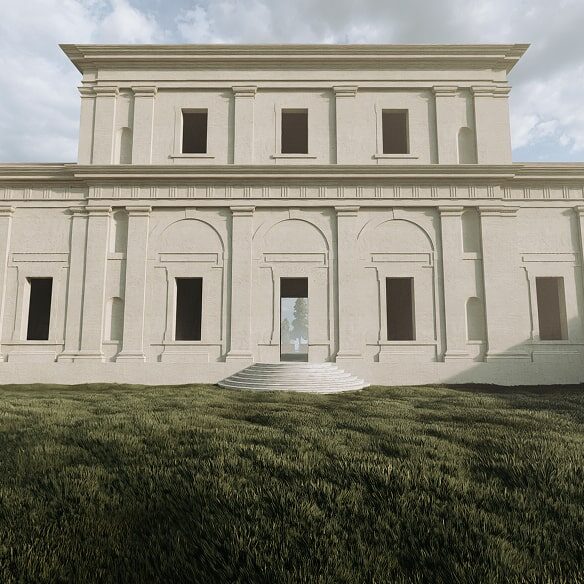
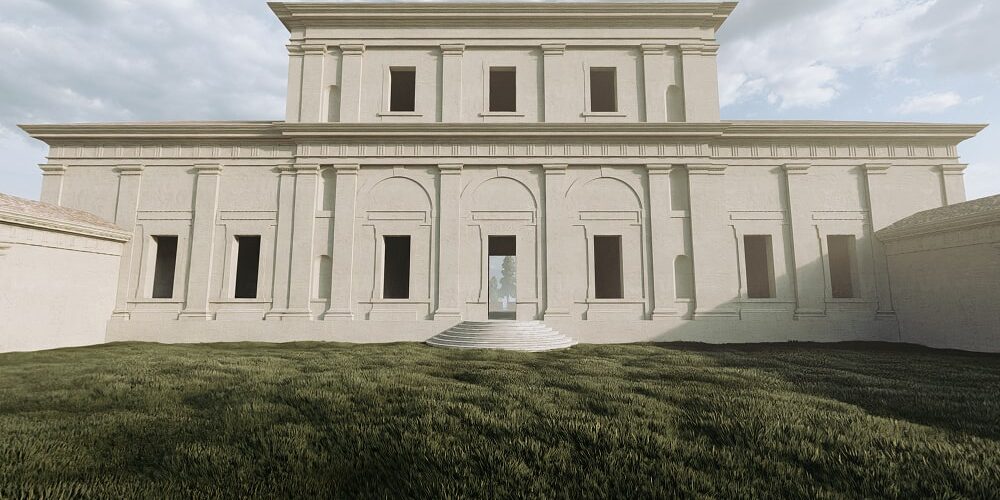
Villa Thiene in Quinto Vicentino can be visited by reservation and was recently renovated with the addition of accessible pathways.
Cookie policy
Su questo sito utilizziamo strumenti propri o di terze parti che memorizzano piccoli file (cookie) sul tuo dispositivo. I cookie sono normalmente utilizzati per consentire il corretto funzionamento del sito (cookie tecnici), per generare rapporti sull’uso della navigazione (cookie statistici) e per pubblicizzare in modo adeguato i nostri servizi/prodotti (cookie di profilazione). Possiamo utilizzare direttamente i cookie tecnici, ma hai il diritto di scegliere se abilitare o meno i cookie statistici e di profilazione. Abilitando questi cookie, ci aiuti a offrirti un’esperienza migliore.