




Listen to the audio
In the 1540s, a crucial decade often overshadowed by Palladio’s mature period after 1550, Andrea Palladio underwent his true transformation, evolving from a skilled local practitioner into a master of universal renown. The catalyst for this extraordinary development was his association with Giulio Romano, the direct heir to the great tradition of Bramante and Raphael. For Palladio, working alongside an artist of such extensive experience and erudition represented a fundamental training ground for tackling complex problems, from the management of building sites to theoretical reflection on architecture.
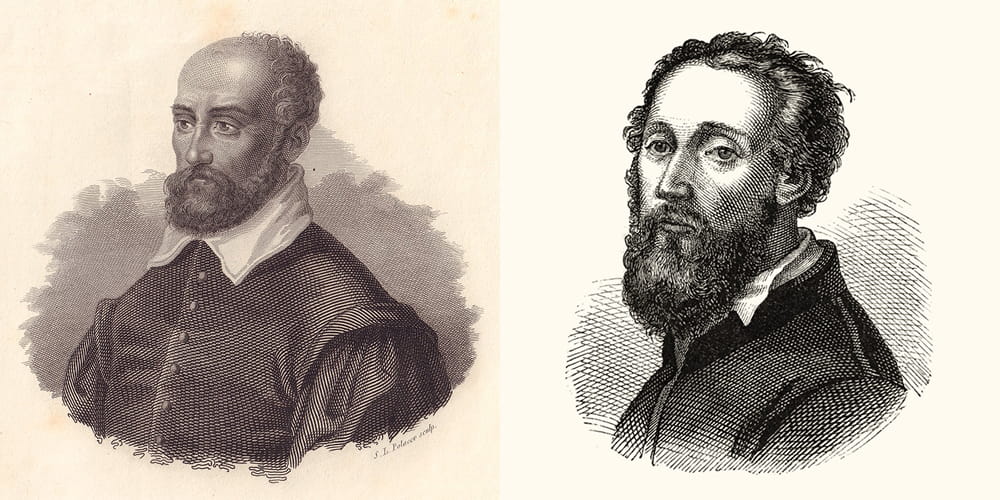
This relationship was most clearly expressed through the commissions of the powerful brothers Marcantonio and Adriano Thiene, among the wealthiest and most politically influential figures in Vicenza. Leaders of the pro-Venetian and pro-French faction, the Thiene brothers sought to project their prestige well beyond the local sphere, forging alliances with the great European courts and offering princely hospitality. The magnificence of their architectural projects directly reflected these ambitions for power and nobility.
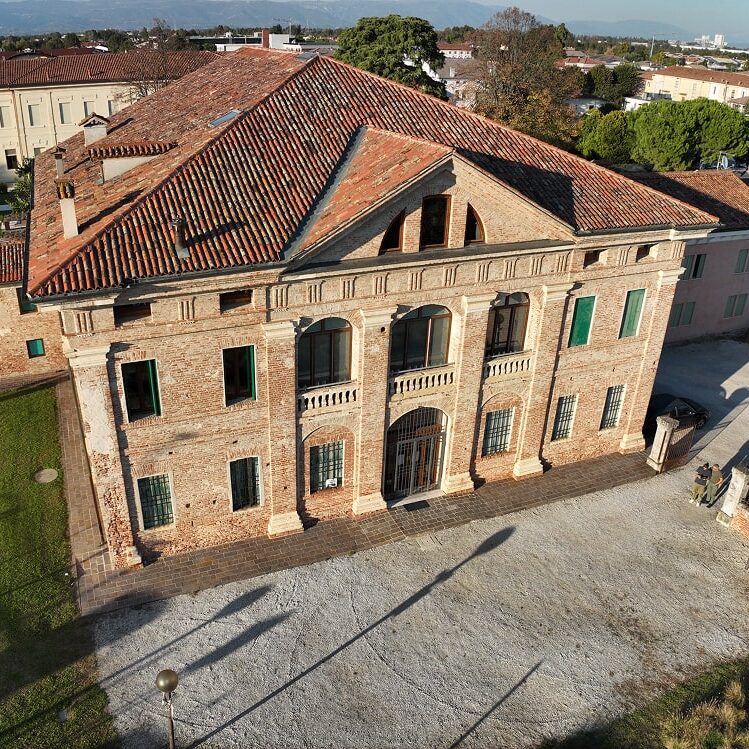
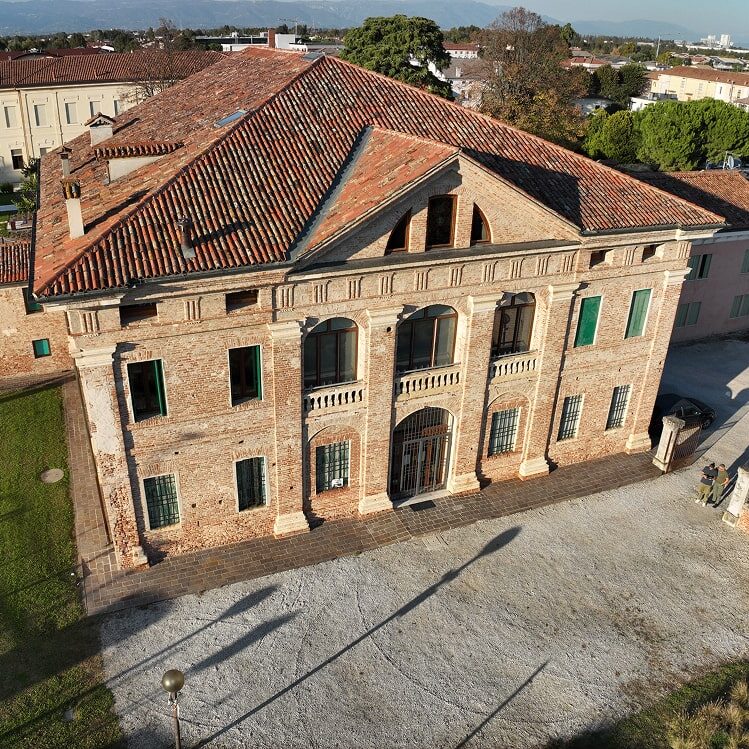
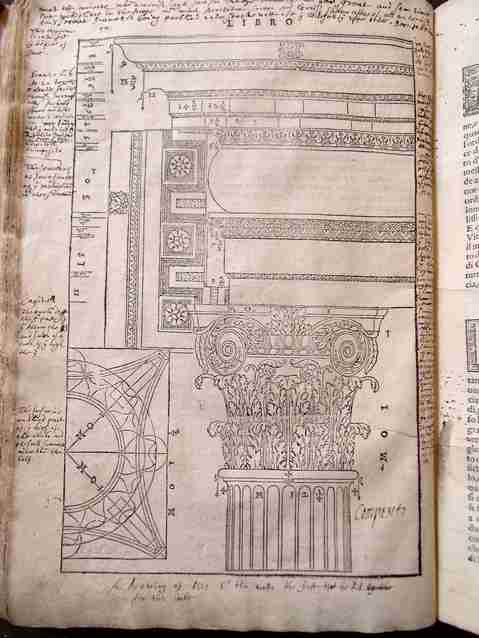
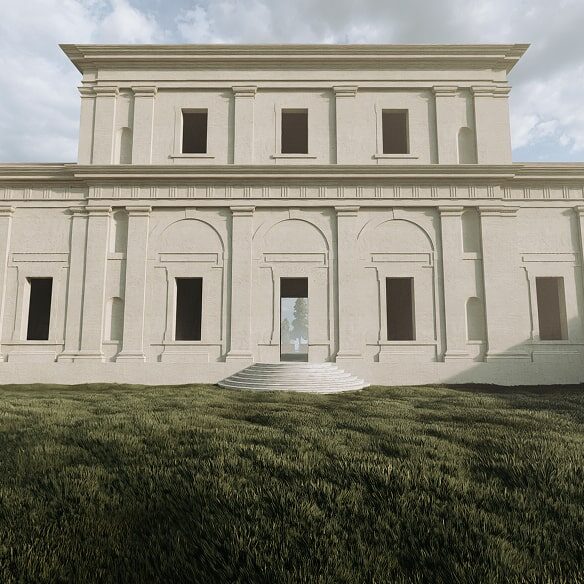
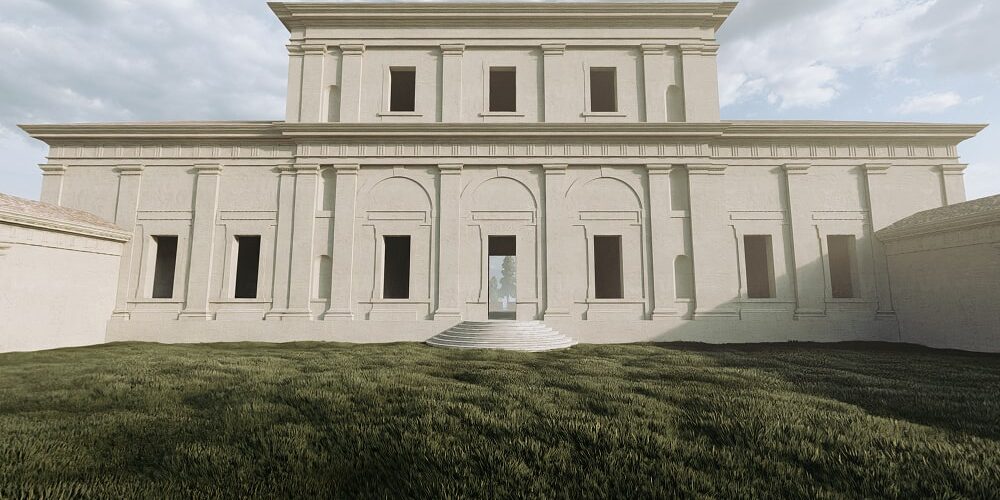
At the heart of this phase was the design of Villa Thiene at Quinto, together with the brothers’ grand urban palace. The precious notes left by the English architect Inigo Jones in 1614 attest that the conception and initial drawings were by Giulio Romano. Palladio initially worked as site supervisor and close collaborator, assuming full control of the building site only after Giulio Romano’s death, which occurred between late October and early November 1546.
This transfer of responsibility was not merely a continuation of the project, but a genuine advanced apprenticeship. From Giulio, Palladio absorbed the use of imposing volumes, the employment of paired pilasters, clearly indebted to Palazzo Te in Mantua, and the ability to conceive the building as a complex organism. At the same time, Palladio began to break radically with the preceding Venetian tradition, introducing innovative solutions such as the raised piano nobile above a rustic basement intended for service functions, which effectively served as a stylobate.
The activity of these years was also marked by the need to confront practical realities and constraints imposed by patrons, as demonstrated by projects in which Palladio had to adapt to pre-existing structures or specific requirements. The experience of the 1540s thus emerges not as a mere youthful interlude, but as the laboratory in which the visual grammar and design flexibility were formed that would make Palladio’s name immortal.
Yet neither the villa nor the Thiene palace was ever completed according to its grand original conception. This was due to a combination of historical and family circumstances: Ottavio Thiene, Marcantonio’s son, married the heir to the Count of Scandiano and in 1565 was granted the title of Count of Scandiano by Alfonso II, Duke of Ferrara, progressively shifting the family’s interests toward Ferrara and Emilia. This change of horizons, together with Adriano’s premature death, explains why the Thiene family’s extraordinary buildings remained unfinished despite their considerable financial resources.
Villa Thiene in Quinto Vicentino can be visited by reservation and was recently renovated with the addition of accessible pathways.
Cookie policy
Su questo sito utilizziamo strumenti propri o di terze parti che memorizzano piccoli file (cookie) sul tuo dispositivo. I cookie sono normalmente utilizzati per consentire il corretto funzionamento del sito (cookie tecnici), per generare rapporti sull’uso della navigazione (cookie statistici) e per pubblicizzare in modo adeguato i nostri servizi/prodotti (cookie di profilazione). Possiamo utilizzare direttamente i cookie tecnici, ma hai il diritto di scegliere se abilitare o meno i cookie statistici e di profilazione. Abilitando questi cookie, ci aiuti a offrirti un’esperienza migliore.