




The analysis of the giornate in Giovanni De Mio’s frescoes.

Listen to the audio
Graphic research carried out by Renzo Benedetti and Monica Val.
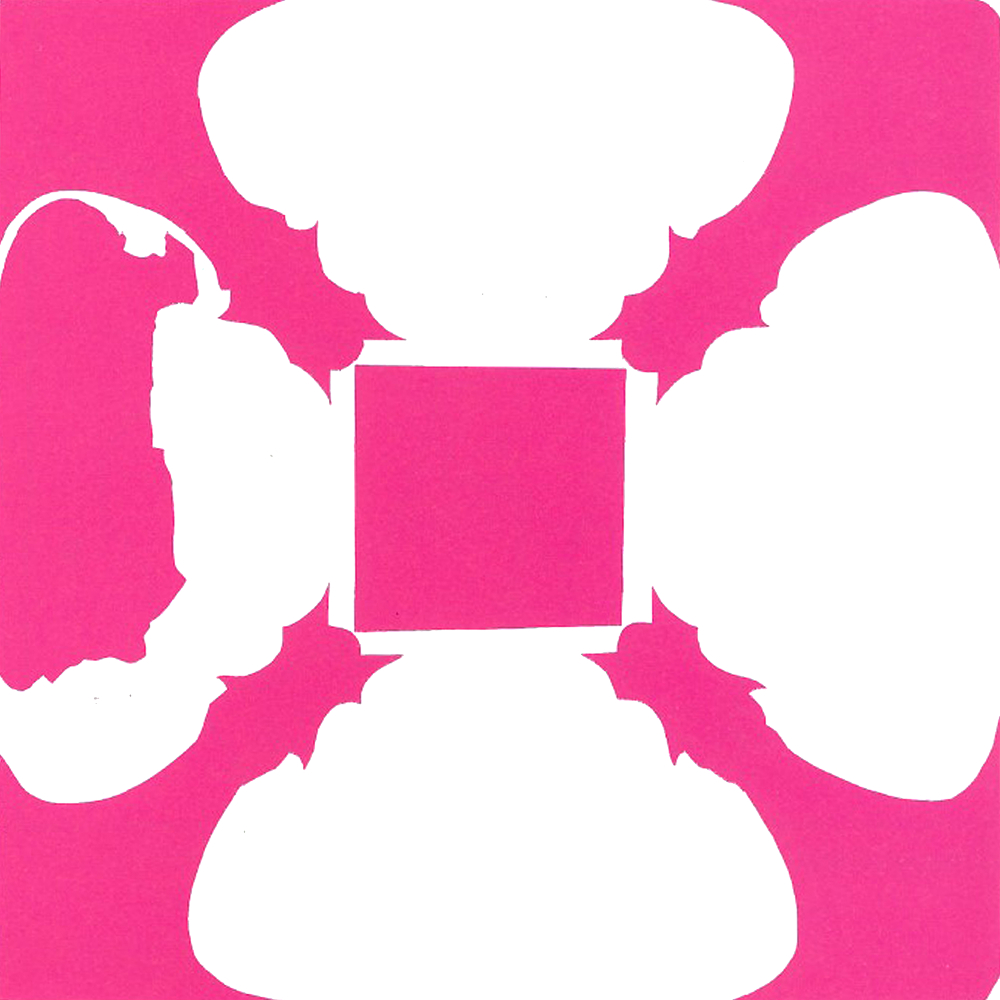
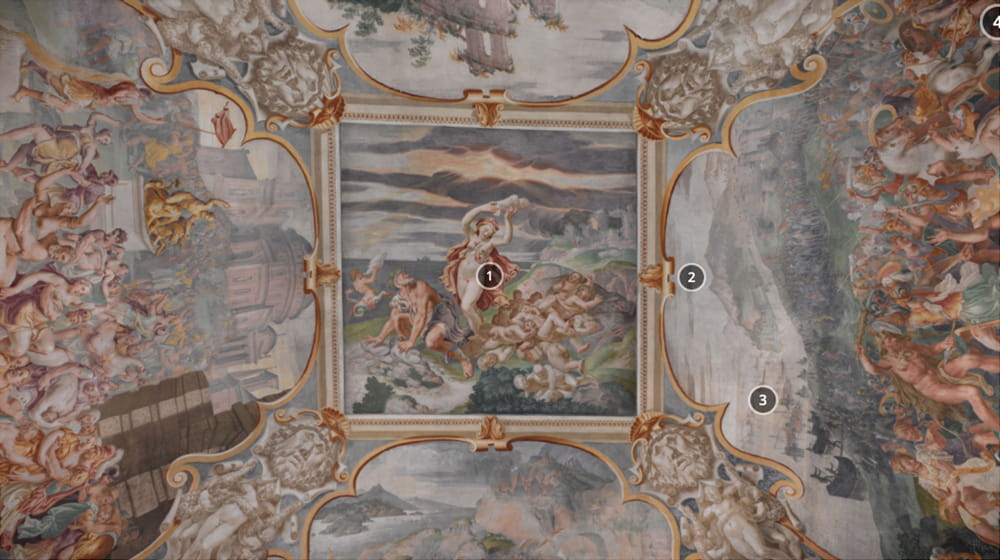
Image 1
General view of the fresco
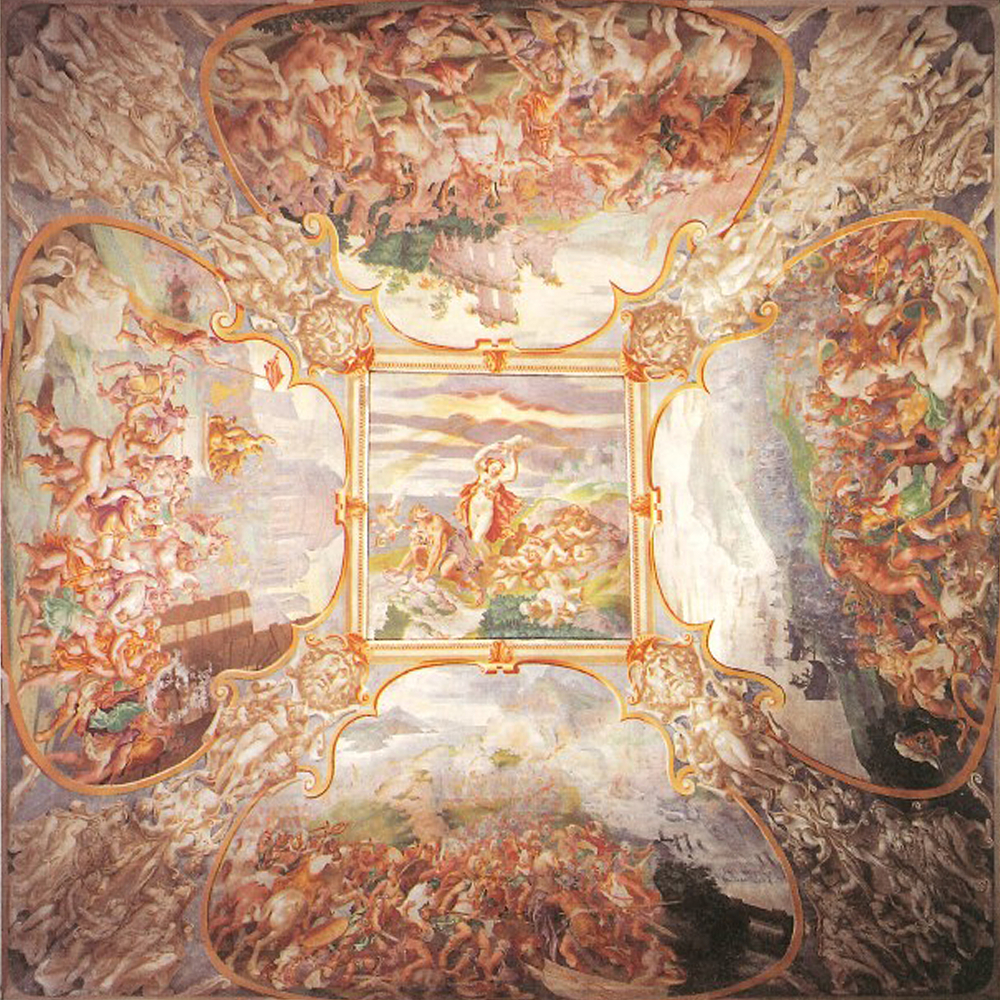
Image 2
Area showing the traced cartoon transfer, impressed on the plaster
The graphic documentation of the giornata joints—that is, the individual sections of fresco painted each day—carried out on the ceiling frescoes of the square hall of Villa Thiene, has proved extremely useful in deepening our understanding of Giovanni De Mio’s work.
This investigative study has made it possible to assign the frescoes a reliable and accurate chronological sequence, showing how some giornate are clearly visible and recognizable, while others are almost imperceptible.
From the sequence of overlapping giornate, and through comparison with the stylistic composition, it has been possible to deduce the following order of execution. Work began with the central panel of the pavilion vault, depicting the myth of Deucalion and Pyrrha.
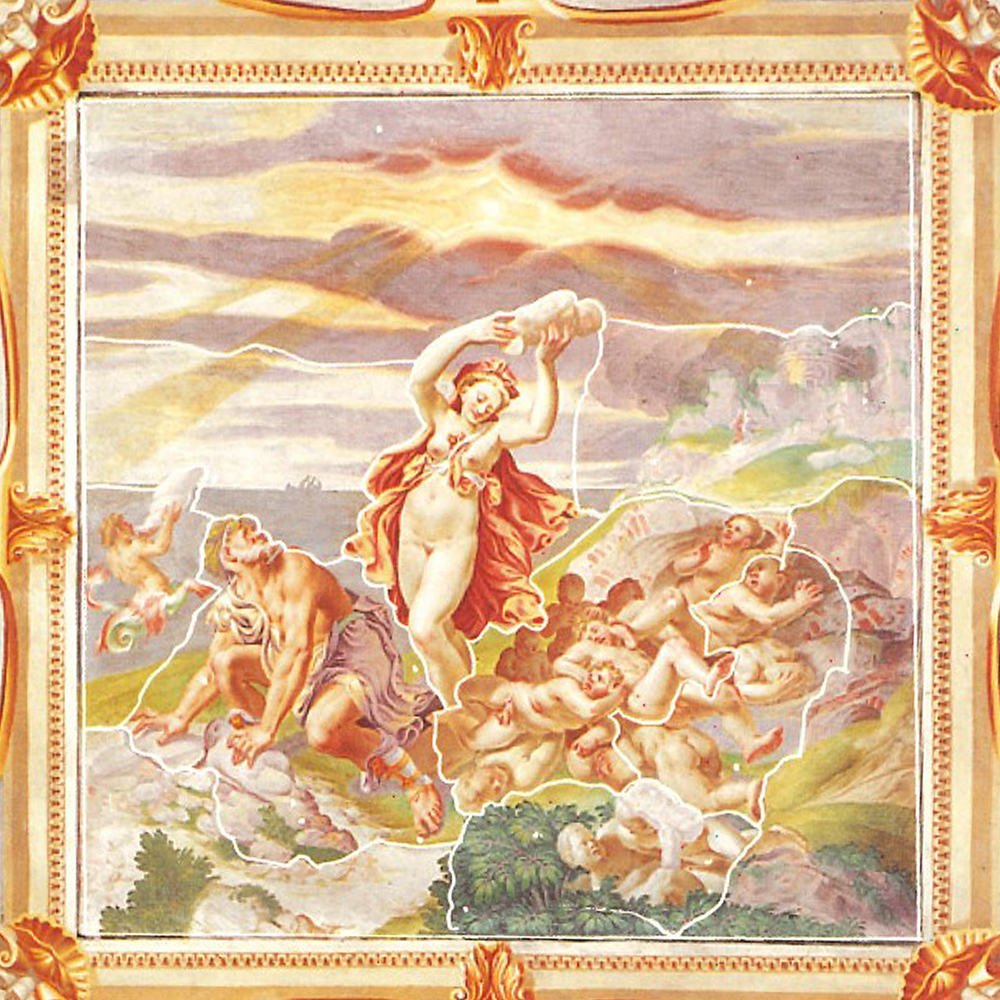
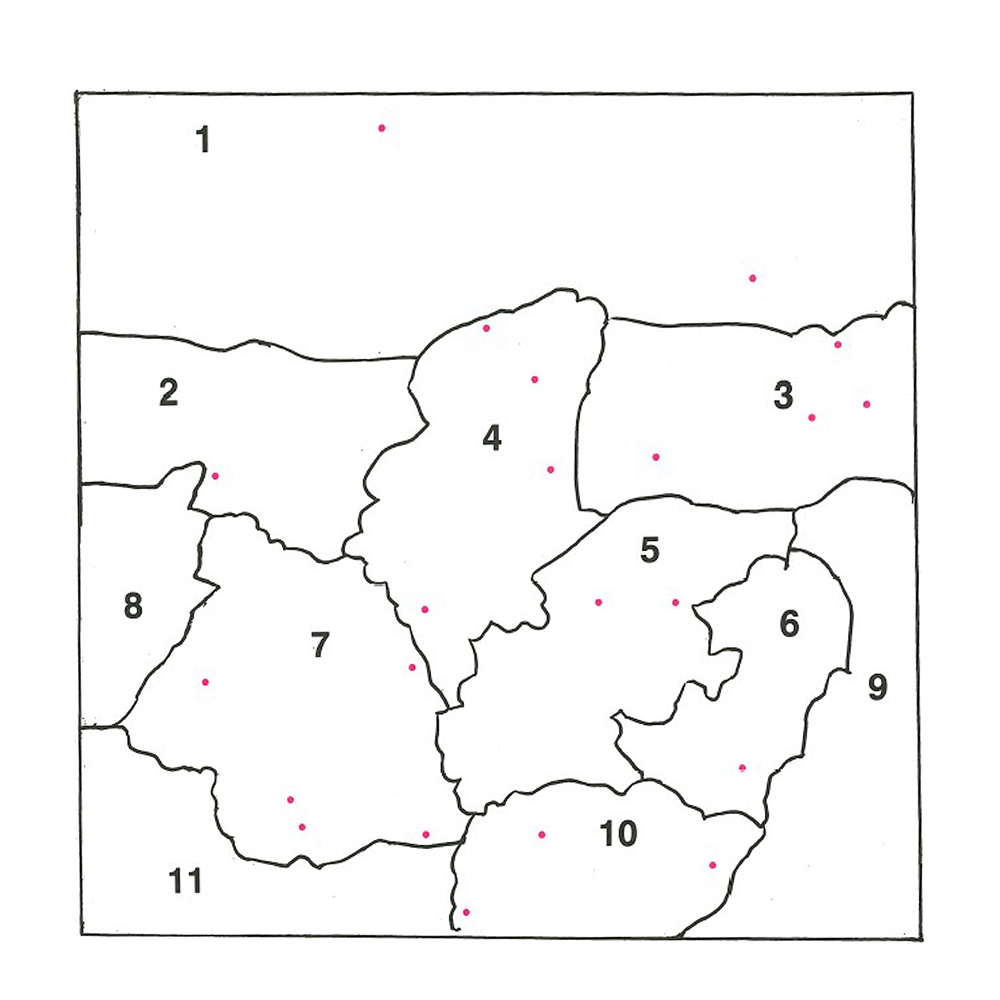
Image 3
“Giornata joins” and points where the cartoon had been fixed
Image 4
Sequence of the giornata joins and points where the cartoon had been fixed
The execution then continued clockwise, starting from the eastern wall facing the doorway leading into the main entrance hall, with the battle scenes:
The Amazons coming to the aid of Troy
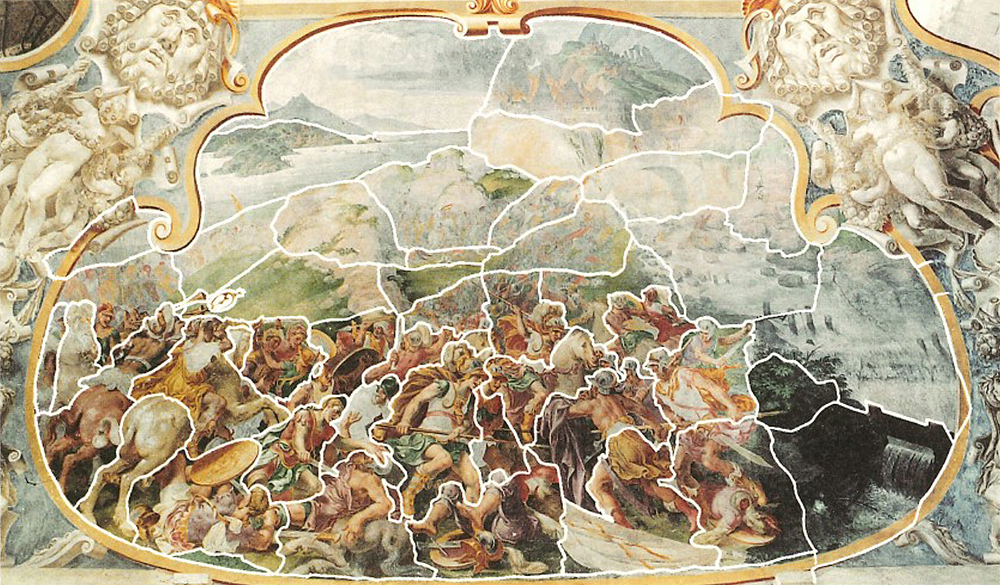
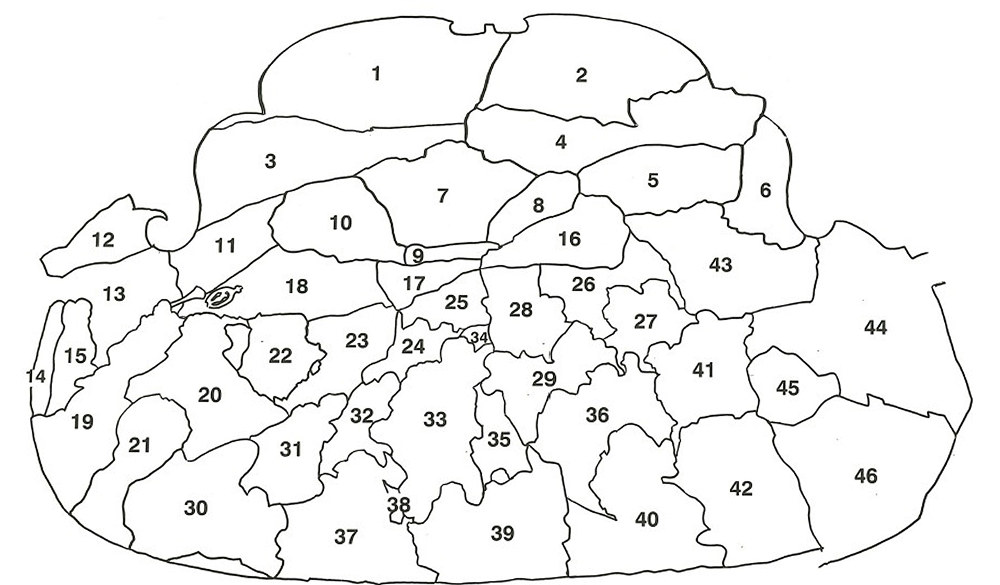
Image 7
G. De Mio, “The Amazons’ Intervention in the Trojan War.”
A memory of ancient matriarchal peoples, the Amazons appear in many legends of the Greek people, beginning with the Homeric poems. Homer recounts that they fought in defense of Troy under the leadership of their queen Penthesilea, who was later killed by Achilles. The episode is also recalled by Virgil in the Aeneid (XI, v. 1045 ff., trans. A. Caro):
…the warlike host
of his Amazons by Thermodon he saw…
…and with her chariot
Penthesilea opening the ranks…
Image 8
Sequence of the giornata joins
Hercules conquering Ippolita
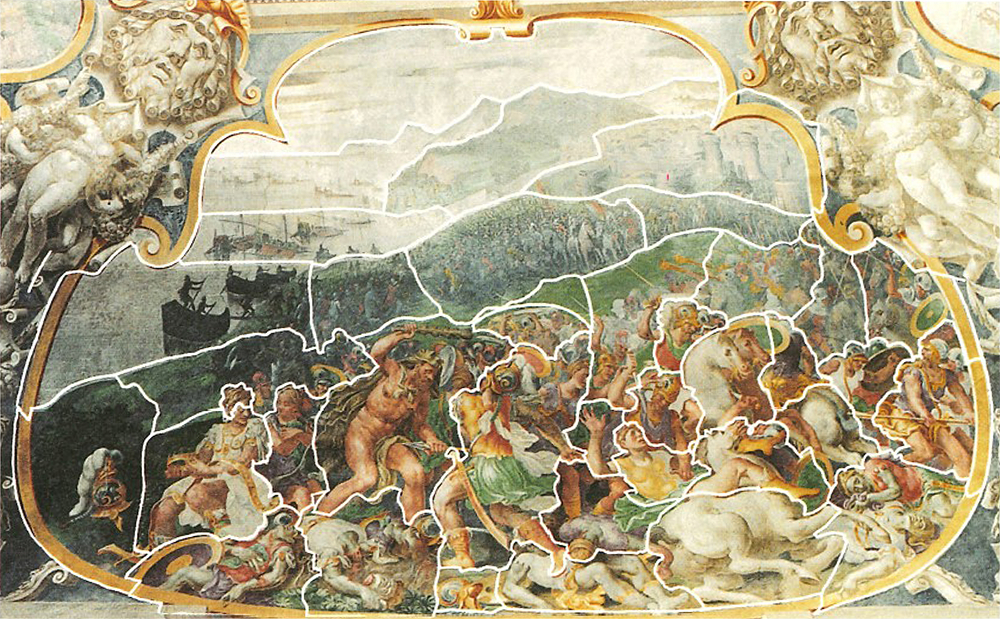
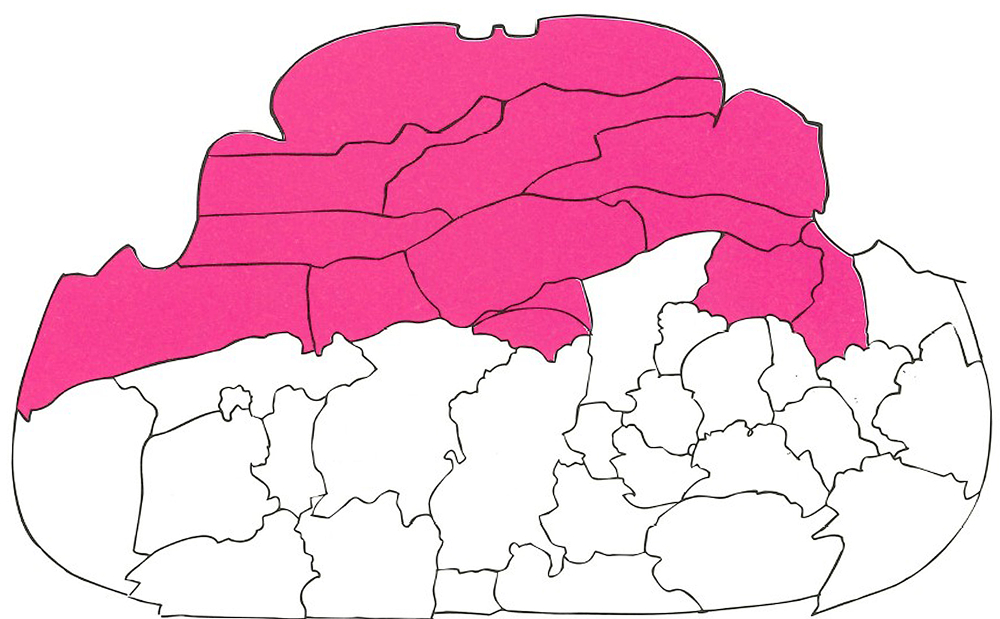
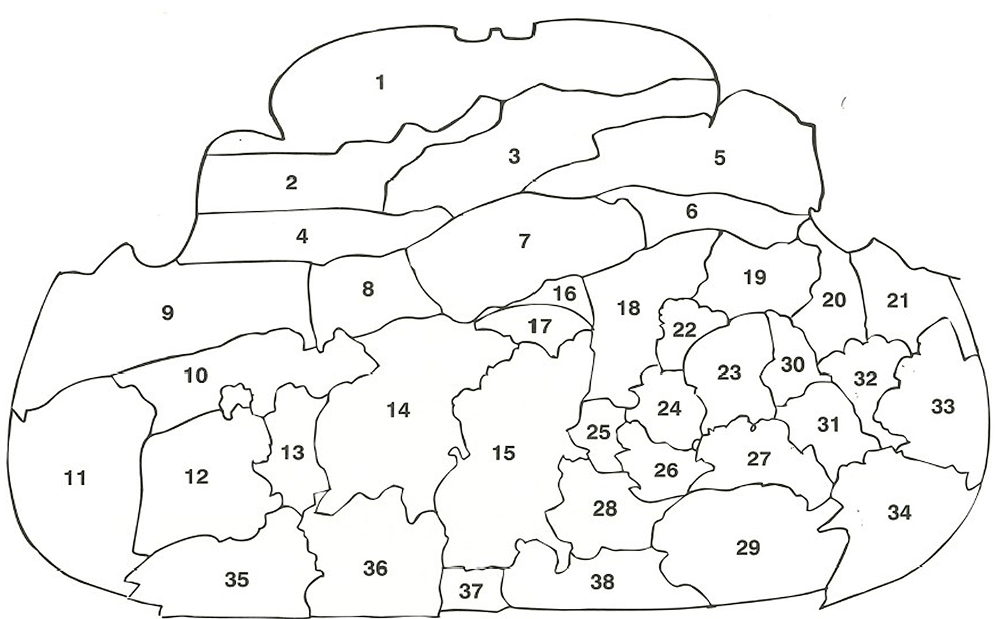
Image 9
G. De Mio, “Heracles Conquers the Belt of Hippolyta.”
Hippolyta, daughter of Ares, god of war, and queen of the Amazons (a people of warrior women living on the banks of the Thermodon south of the Black Sea), had received from her father a belt as a symbol of power. In order to obtain it, Heracles undertakes an expedition against the Amazons. In the fresco, the Hero, covered with a lion skin, defeats Hippolyta in single combat, thus seizing the precious belt.
Image 10
Areas where assistants may have worked and sub-sequence of the giornata joins
Image 11
Sequence of the giornata joins
The Rape of the Sabine Women
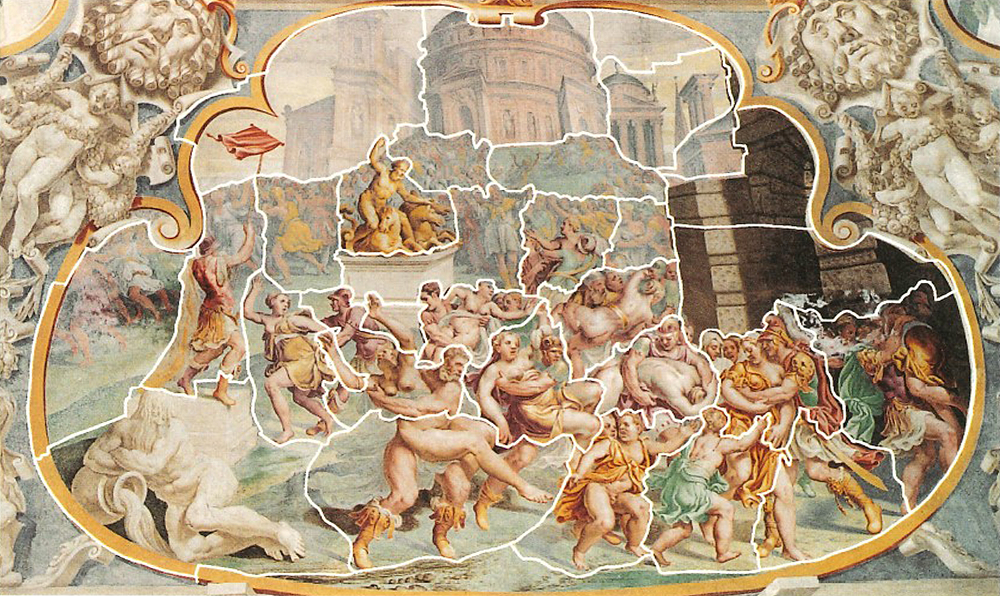
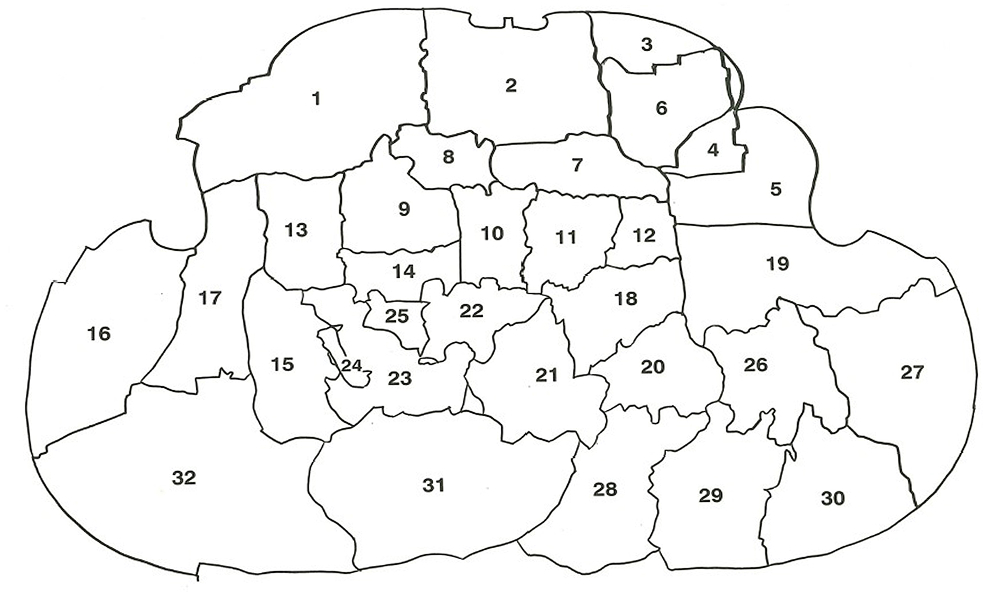
Image 15
G. De Mio, “The Rape of the Sabine Women.”
The event took place at the time of the founding of Rome. The Latin historian Livy recounts it (1, 8,9; trans. Jacopo Nardi, Venice 1540):
“…The Roman Republic had already become so powerful that in war it could equal any other state… yet because of the scarcity and lack of women, that greatness was destined to last only the lifetime of one generation.”
When the neighboring cities refused to intermarry with the Romans, Romulus organized a festival in honor of Neptune, inviting all the neighboring peoples.
“…Now the whole multitude of the Sabines, with their women and children, having been kindly invited into the houses and courteously received… when the hour of the festival came, and everyone’s minds and eyes were occupied with it… the Roman youth, according to the agreed plan, at the given signal rushed to seize the maidens…”
A war followed, from which the Romans emerged victorious.
Image 16
Sequence of the giornata joins
The battle between the Lapiths and the Centaurs
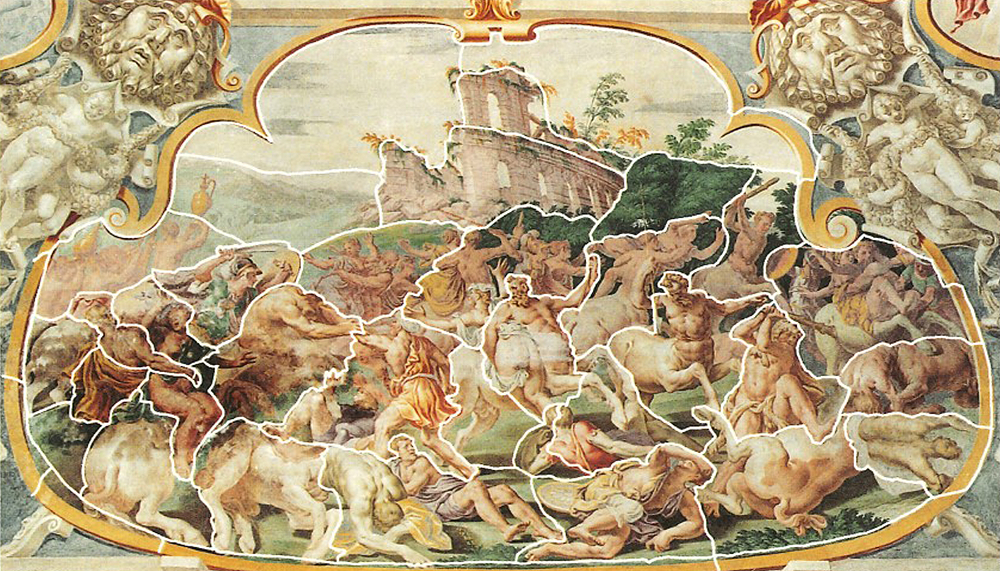
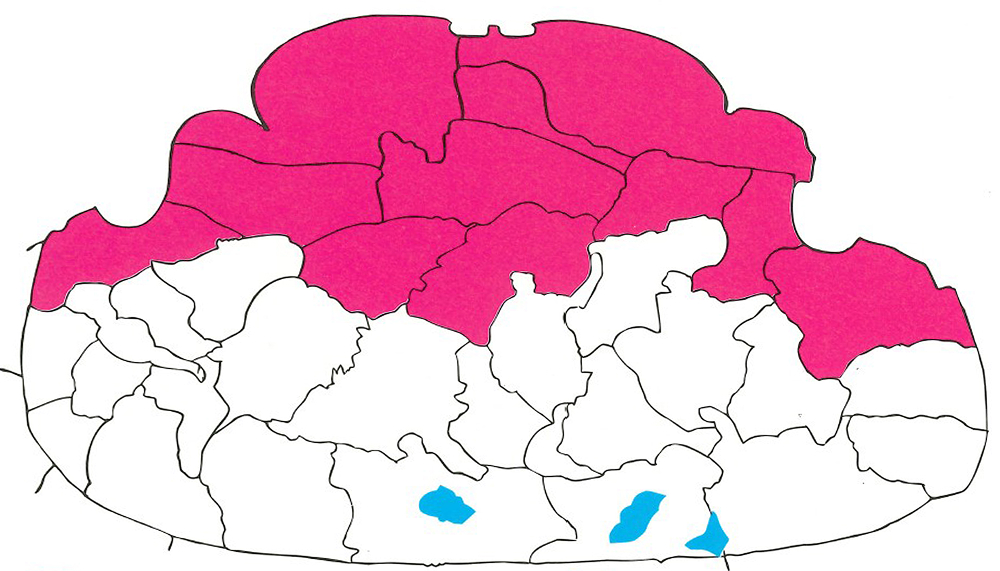
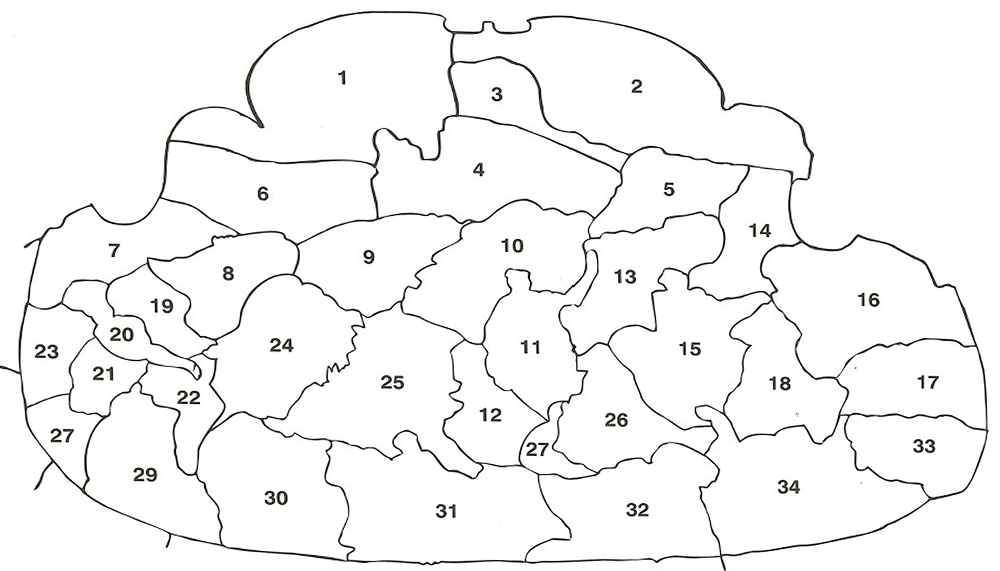
Image 12
G. De Mio, “Battle between Centaurs and Lapiths.”
The Lapiths, a mythical people of Thessaly, originally inhabited the peaks of Mount Pindus and claimed descent from the river god Peneus and the nymph Creusa. They performed many deeds, but the most famous was the struggle against the Centaurs, creatures with the body of a horse and the torso of a man. This is the episode depicted in the fresco: Pirithous, king of the Lapiths, on the occasion of his wedding to Hippodamia, invites the Centaurs to the celebrations. Once drunk, they attempt to abduct the king’s bride and other Lapith women. A battle then breaks out within Pirithous’s palace between the finest Lapith heroes and the Centaurs.
Image 13
(Pink color) Areas where assistants may have worked
(Light blue color) Portions of the fresco left unfinished
Image 14
Sequence of the giornata joins
The monochrome corner decorations with caryatids, putti, and festoons were completed at a later stage, when the pictorial narrative had already taken on a unified form.
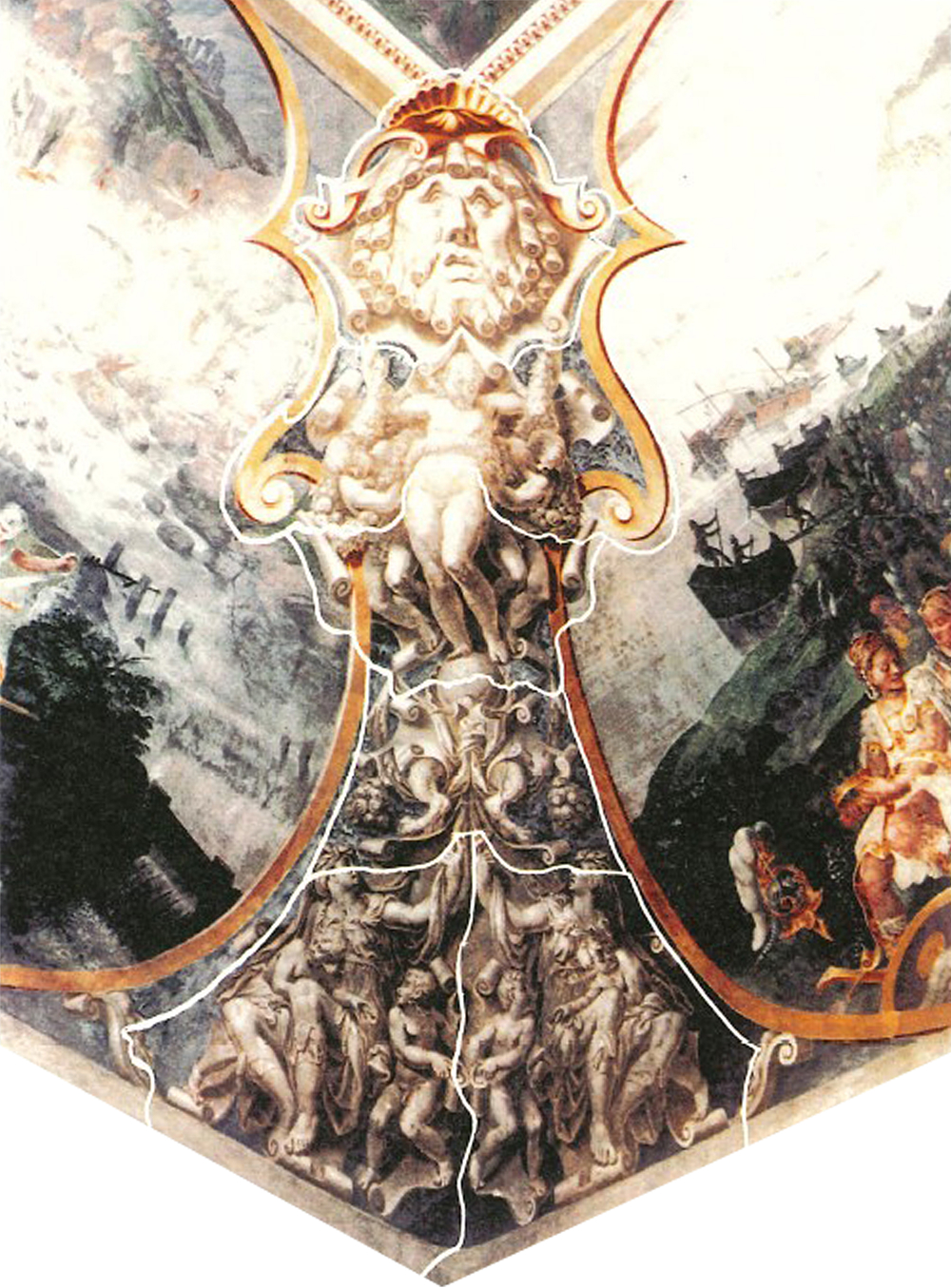
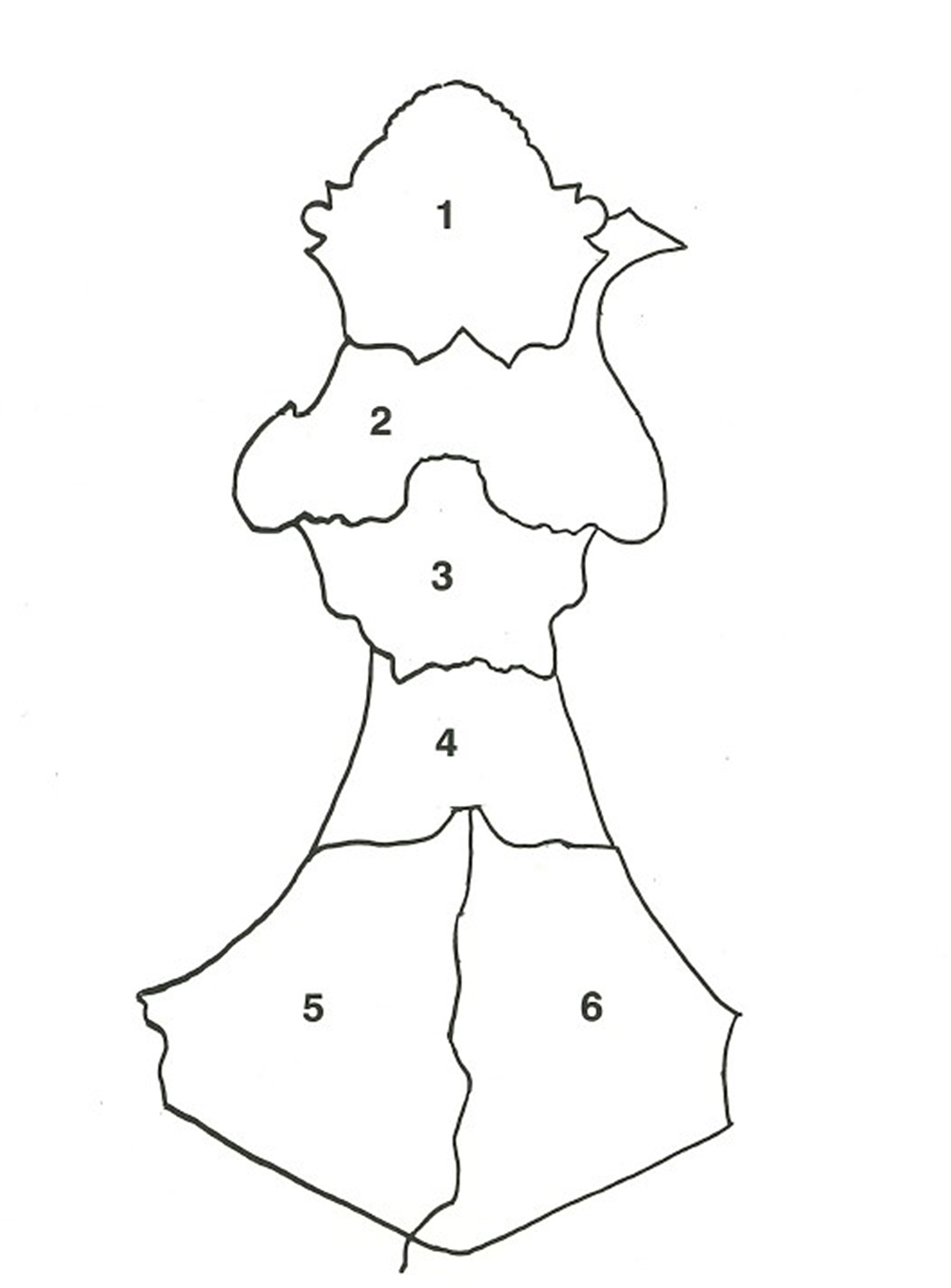
Image 5
Monochrome corner decoration with caryatids, putti, festoons, and grotesque mask
Image 6
Sequence of the giornata joins with “pontate” progression
The overall rhythm of the composition, the distinctive modeling of the figures, and the rendering of the bodies—marked by a more insistent and rapid brushwork—suggest that the medallions depicting the battle narratives, as well as those showing the Lapiths and Centaurs, were among the last to be executed.
It can also be observed that some giornate were left unfinished, possibly due to the onset of a certain degree of physical fatigue during execution.
In the Rape of the Sabine Women, moreover, the stone on which a Roman soldier stands while waving a banner appears to bear the trace of an autobiographical signature, a kind of personal seal left by the artist.
In his “battle” scenes, De Mio displays a lively and richly varied chromatic palette, skillfully articulated to create a powerful sense of movement and tension.
The pictorial narrative is further enriched by the presence of meticulous details: the careful depiction of helmets, bodies fallen to the ground, and figures struck in combat—all elements that clearly convey the violence of the clash.
1974–1975: first conservation restoration and complete monitoring of the villa, carried out by Professor Tiozzo of Mira on behalf of the Ente Ville Venete of Venice.
1999: second conservation and cleaning intervention, aimed at removing saline efflorescence caused by water infiltration from the roof.
The works were carried out by Renzo Benedetti and Monica Val, with the contribution of the Provincial Administration of Vicenza.
Villa Thiene in Quinto Vicentino can be visited by reservation and was recently renovated with the addition of accessible pathways.
Cookie policy
Su questo sito utilizziamo strumenti propri o di terze parti che memorizzano piccoli file (cookie) sul tuo dispositivo. I cookie sono normalmente utilizzati per consentire il corretto funzionamento del sito (cookie tecnici), per generare rapporti sull’uso della navigazione (cookie statistici) e per pubblicizzare in modo adeguato i nostri servizi/prodotti (cookie di profilazione). Possiamo utilizzare direttamente i cookie tecnici, ma hai il diritto di scegliere se abilitare o meno i cookie statistici e di profilazione. Abilitando questi cookie, ci aiuti a offrirti un’esperienza migliore.